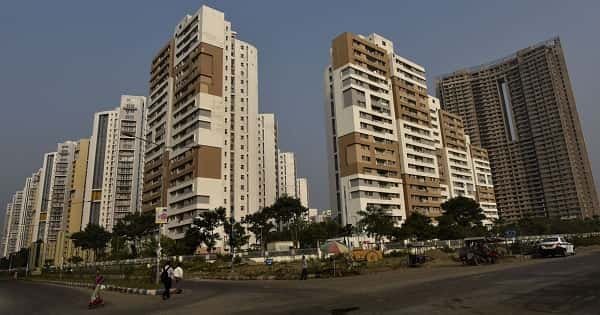
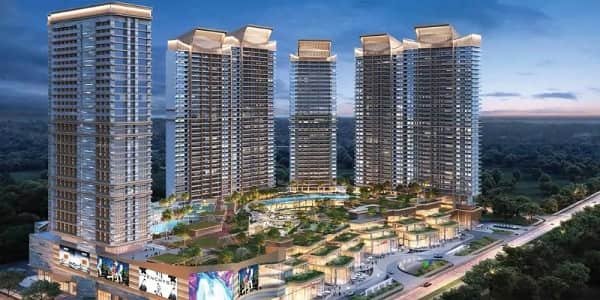
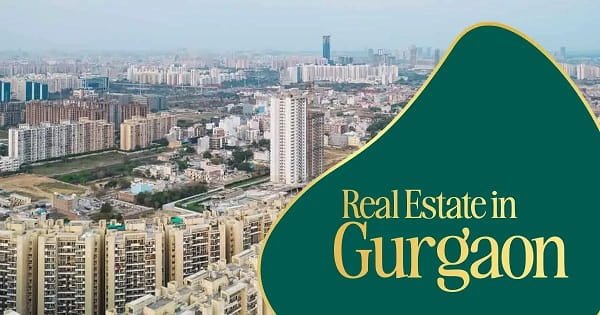
Delhi NCR’s real estate market in 2026 is simultaneously one of India’s most exciting and most complex property stories — a market of extraordinary contradictions where some micro-markets are delivering once-in-a-generation appreciation returns while others show warning signs of price inflation disconnecting from genuine buyer demand. Understanding Delhi NCR’s property market in 2026 requires navigating these contradictions honestly rather than accepting either the bullish narrative of uninterrupted growth or the bearish narrative of impending correction.
The headline numbers are genuinely impressive. Delhi NCR led India’s luxury home launches in H1 2024, accounting for 26% of units priced above ₹5 crore among all major Indian cities. Delhi NCR recorded housing sales exceeding ₹1.53 lakh crore in 2024, surpassing both Mumbai and Hyderabad — a symbolic milestone for a market that for most of the previous decade struggled with oversupply, delayed projects, and developer defaults. Unsold inventory dropped 51% from 1,73,117 units in Q1 2020 to approximately 84,500 units by Q1 2025, with Noida specifically seeing inventory decline of 72% — the clearest possible signal that genuine absorption has been outpacing new supply in the premium and mid-premium segments.
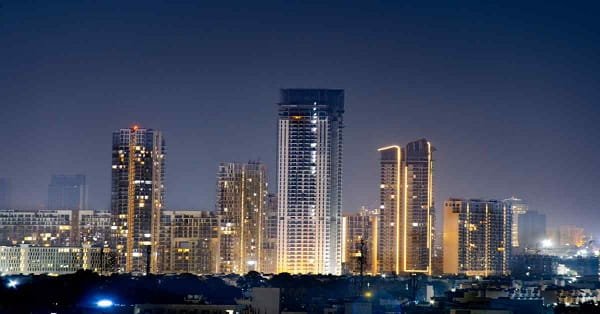
Delhi NCR Real Estate Overview 2026
The Delhi NCR real estate market is not a single market but a confederation of distinct property ecosystems separated by geography, price, regulatory framework, and buyer profile. Delhi proper — the capital territory — is constrained by DDA development norms and limited private development land, making it primarily a resale market for established localities and a redevelopment market for older colonies. Gurugram (Gurgaon), Noida, Greater Noida, Ghaziabad, and Faridabad form the extended NCR periphery where most new residential development happens — each governed by different state governments (Haryana for Gurugram and Faridabad, Uttar Pradesh for Noida and Greater Noida and Ghaziabad) with different RERA implementations, different regulatory frameworks, and different infrastructure investment profiles.
The Delhi Master Plan 2041 — the most comprehensive urban planning document for the capital territory in two decades — is actively reshaping land use across the NCR, pushing urban expansion into corridors that were fringe zones five years ago and creating new residential viability in areas previously considered too peripheral for serious property investment.
Current Market Status: Price Appreciation and Zone-Level Analysis
Price appreciation across Delhi NCR’s key micro-markets has been among the most dramatic of any Indian real estate market over the three-year period from 2022 to 2026.
Gurugram — Golf Course Extension Road (GCER): has seen 35 to 55 percent appreciation over the three years from 2022 to 2026 — one of India’s strongest residential market performances over any comparable period. Premium residential prices in this corridor now touch ₹18,000 to ₹22,000 per square foot for new launches. The driver is the specific combination of corporate office proximity (the DLF Cyber City and GCER-adjacent office parks employ tens of thousands of senior professionals), luxury project quality from established developers, and a buyer profile of HNIs and senior corporate executives who prioritise lifestyle quality over entry price.
Gurugram — Dwarka Expressway: has seen 30 to 50 percent appreciation over the same period, with property rates ranging from ₹12,000 to ₹18,000 per square foot. The infrastructure maturation story is specifically powerful here: the Dwarka Expressway’s physical completion and the social infrastructure development (schools, hospitals, commercial strips) that has followed have converted what was an investment-grade corridor into a genuinely liveable end-user market. CBRE’s Housing Affordability Index 2026 specifically noted that buyers earning around ₹75 lakh annually are finding 3 BHK homes increasingly attainable in this corridor.
Noida Expressway: has seen 30 to 45 percent appreciation over the same three-year period. Prices reached ₹14,946 per square foot in 2024 — representing a 152% increase from 2019 — with luxury segments averaging above ₹1.5 crore per unit. The Noida International Airport (Jewar) under construction in Greater Noida has been the most significant structural catalyst for appreciation in the broader Noida-Greater Noida-Yamuna Expressway belt, creating anticipation-driven demand that is pulling forward future appreciation into current prices.
South Delhi: (Defence Colony, Greater Kailash, Green Park, Safdarjung Enclave) has seen 25 to 40 percent appreciation, driven by extremely constrained supply and consistent HNI and NRI demand for the most prestigious Delhi addresses. Property rates in prime South Delhi localities range from ₹25,000 to ₹60,000 per square foot for independent floor and villa properties.
Delhi’s Dwarka Sub-City: has seen 20 to 32 percent appreciation, supported by improving airport connectivity through the Aerocity metro link and the Dwarka-Gurugram expressway. Prices range from ₹12,000 to ₹18,000 per square foot for apartment inventory.
The Luxury Market’s Dominance
Delhi NCR’s most distinctive characteristic in 2026 is the extent to which luxury and premium housing — properties priced above ₹2 crore — dominates new launch activity and transaction value. Delhi NCR led India in luxury home launches through 2024, and the trend has continued into 2026. Buyers in this segment are HNIs, senior IT and BFSI professionals, business owners, and NRIs who are deploying capital into premium branded residences and ultra-luxury gated communities in Gurugram, Noida, and South Delhi.
This luxury dominance creates a market that looks uniformly strong in its headline numbers but may be masking weaker conditions in the affordable and mid-segment categories. Affordable housing in Delhi NCR — priced below ₹45 lakh — continues to face supply constraints, with developers largely uninterested in margins this segment offers. The mid-segment (₹50 lakh to ₹1 crore) is the most structurally constrained between affordability floor and premium ceiling.
Honest Assessment: Warning Signs in 2026
An honest analysis of Delhi NCR’s 2026 market must acknowledge the warning signs that some market analysts have raised alongside the bullish data points.
Site visit frequency and serious buyer inquiries have moderated in some micro-markets even as prices continue to rise. Inventory in the ₹3 crore to ₹5 crore segment shows overhang in specific corridors of New Gurugram. Developers are raising prices in some projects to maintain profitability against rising construction costs (cement, steel, compliance, and financing) rather than as a response to genuine demand acceleration — a critical distinction that buyers should verify before committing.
The CBRE India Residential Market Outlook 2026 report signalled an important positive: for the first time since the post-pandemic boom, household income growth in Delhi NCR is projected to outpace property price appreciation, improving the price-to-income ratio. This suggests that affordability is actually improving in relative terms even as absolute prices rise — a crucial signal that the market’s appreciation is sustainable rather than speculative.
Key Infrastructure Catalysts
The Noida International Airport at Jewar — under construction and expected to commence partial operations in late 2026 to 2027 — is the most anticipated infrastructure catalyst in NCR real estate, expected to drive significant appreciation across the Yamuna Expressway belt, Greater Noida West, and the sectors immediately surrounding the airport zone.
Metro extensions across Gurugram (Phase II connecting Millennium City Centre to Dwarka), Noida (Aqua Line extensions), and Ghaziabad are progressively being completed, each unlocking residential demand in previously poorly connected localities.
The Rapid Rail Transit System (RRTS) connecting Delhi to Ghaziabad, Meerut, Alwar, and Panipat is reshaping commuter patterns across the NCR periphery, making satellite towns along RRTS corridors attractive for buyers who previously considered the distance from Delhi’s employment hubs prohibitive.
Forecast for 2026–2028
For Delhi NCR specifically, certain micro-markets are projected to see eight to ten percent or above annual appreciation in 2026, particularly in well-connected Gurugram corridors and Noida Expressway belt. The Reuters consensus of five to seven percent annual appreciation for Indian major cities provides the broader frame, with Delhi NCR’s premium corridors likely outperforming the national average.
Rental values across NCR are expected to grow in the five to eight percent range, driven by affordability pressure keeping more aspiring owners in the rental pool and rising demand for quality rental housing near employment hubs in Gurugram and Noida.
Areas to Watch in Delhi NCR 2026
Gurugram’s Golf Course Extension Road for premium residential investment. Dwarka Expressway for mid-to-premium end-user buying. Noida’s Sector 150 and airport-adjacent zones for infrastructure-led appreciation. Greater Noida West for affordable entry with improving infrastructure. Yamuna Expressway corridor for long-horizon Jewar Airport-driven investment.
FAQs
Q: Which is the most appreciating area in Delhi NCR in 2026?
A: Gurugram’s Golf Course Extension Road has seen the strongest appreciation at 35 to 55 percent over 2022–2026, followed by the Noida Expressway belt at 30 to 45 percent and Dwarka Expressway at 30 to 50 percent. South Delhi’s premium localities have appreciated 25 to 40 percent over the same period with extremely limited new supply.
Q: Is Delhi NCR property in a bubble in 2026?
A: Market analysis suggests the market is in a strong appreciation cycle but not yet at bubble levels. Infrastructure catalysts — particularly the Jewar Airport and metro extensions — have more runway ahead. However, warning signs of buyer hesitation and price-demand mismatches in specific segments warrant cautious evaluation of specific projects before purchase.
Q: What is driving luxury housing demand in Delhi NCR?
A: India’s rapidly expanding HNI and UHNI class, strong corporate hiring in Gurugram’s IT and BFSI sectors, NRI investment driven by India’s economic growth story, and the post-COVID premium placed on larger, better-amenitised homes have all converged to drive exceptional luxury housing demand across Delhi NCR.
Q: What is the impact of the Jewar Airport on real estate?
A: The Noida International Airport at Jewar has been the single most significant structural catalyst for appreciation along the Yamuna Expressway, Greater Noida, and Noida Extension corridors. Sectors adjacent to the airport zone have seen anticipation-driven demand; actual operational milestones from late 2026 onward are expected to accelerate this.
Q: What should a first-time buyer consider before buying in Delhi NCR in 2026?
A: Prioritise UP RERA or Haryana RERA registration verification for any project under consideration. Verify the developer’s track record for actual project delivery rather than relying on marketing materials. Assess infrastructure that is operational rather than promised. Compare EMI-to-income ratios carefully — CBRE’s data suggests affordability is improving in NCR in 2026, creating the most balanced entry opportunity in five years for first-time buyers.