Gurugram — Gurgaon — is India’s most watched, most debated, most analysed real estate market outside of South Mumbai. Few cities have generated as much wealth through property appreciation in as short a time. Fewer still have created as much complexity around the question of whether that appreciation can continue, has peaked, or still has meaningful runway ahead.
In 2026, Gurugram is positioned in what market analysts call the expansion-stabilisation phase — not the early-cycle recovery of 2021 to 2022 when post-pandemic demand revived and infrastructure projects began delivering on their promises, and not the acceleration phase of 2023 to 2024 when Dwarka Expressway and Golf Course Extension Road repriced upward by 35 to 45% as infrastructure matured. What Gurugram offers in 2026 is something more nuanced: a structurally strong market in its infrastructure-ready corridors, an increasingly selective buyer base that demands quality, RERA compliance, and proven delivery track records, and appreciation projections of 8 to 15% annually across different segments — modest by the previous cycle’s standards, but genuine, sustainable, and anchored in actual demand rather than speculative front-running.
Delhi-NCR recorded a 30% year-on-year rise in housing sales in Q1 2026, with Gurugram contributing nearly 73% of all residential launches in the region — a market share so dominant that understanding Delhi-NCR’s property market in 2026 is, in large measure, understanding Gurugram’s.
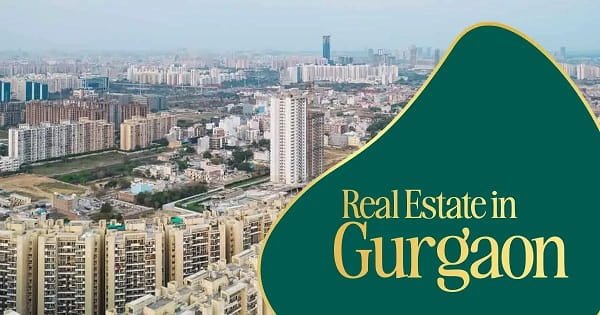
Gurugram Real Estate Overview 2026
Gurugram’s evolution from Delhi’s distant industrial suburb in the 1980s to India’s most important non-Mumbai corporate real estate market is one of the great urban transformation stories of the post-liberalisation era. The city today hosts the Indian headquarters of hundreds of multinational corporations, the regional offices of almost every major global technology, financial services, and professional services firm operating in India, and the country’s most significant concentration of Global Capability Centres (GCCs) — the offshore headquarters and high-skill operations hubs through which global corporations run their India-based functions.
This employment concentration creates structural property demand that is relatively insulated from the speculative cycles that affect less employment-anchored markets. Senior corporate professionals with substantial compensation packages are buying and renting in Gurugram not primarily because they expect property appreciation but because they need to live near their offices. This end-user foundation beneath the investment layer is the structural difference between Gurugram and markets that depend more heavily on speculative momentum.
The CBRE India Residential Market Outlook 2026 noted a crucial development: for the first time since the post-pandemic boom, household income growth in Delhi-NCR is projected to outpace property price appreciation. This means Gurugram’s price-to-income ratio is actually improving rather than deteriorating — the most encouraging possible signal for market sustainability.
Current Market Status: Corridor-Level Analysis
Gurugram’s property market is not uniform. Understanding it requires corridor-level precision rather than city-level averages.
Golf Course Road: (Sectors 42, 54, 56, DLF Golf and Country Club proximity) is Gurugram’s most prestigious and most mature luxury corridor — the Indian residential equivalent of prime central London in terms of its social positioning among India’s corporate elite. Property rates range from ₹18,000 to ₹40,000 per square foot for apartment inventory, with independent houses and trophy villas substantially higher. DLF The Camellias — launched at approximately ₹22,500 per square foot — has transacted between ₹65,000 and ₹1,00,000 per square foot, demonstrating the potential of long-term premium real estate appreciation in this corridor over a fifteen-year holding period. Golf Course Road has seen 65 to 80% appreciation since 2019 and remains the anchor of Gurugram’s luxury investment case.
Golf Course Extension Road (GCER): (Sectors 57 to 66, M3M, Emaar, Godrej developments) has been 2026’s strongest appreciation story in the entire NCR — recording 35 to 55% three-year appreciation that JLL, ANAROCK, and CBRE all confirm in their data. Prices in the most premium GCER projects now range from ₹15,000 to ₹28,000 per square foot for new launches. The GCER corridor has attracted the most sophisticated HNI buyer profile in the NCR — senior executives, first-generation entrepreneurs, and NRI buyers — who perceive it as Golf Course Road quality at Golf Course Extension pricing. This buyer profile’s depth has sustained absorption even at premium price levels that would have seemed implausible in 2020.
Dwarka Expressway: (Sectors 84 to 113, Palam Vihar extension) has delivered 30 to 50% three-year appreciation as the physical expressway and its social infrastructure — schools, hospitals, malls, grocery clusters — matured from promised to operational. Property rates along Dwarka Expressway range from ₹8,000 to ₹18,000 per square foot depending on sector maturity and project quality. Its direct connectivity to Indira Gandhi International Airport is the single most powerful practical advantage of this corridor for frequently-travelling professionals. Several developers including Godrej, DLF, and Central Park have significant launch activity in Dwarka Expressway sectors in 2026, reflecting developer confidence in continued absorption.
Southern Peripheral Road (SPR): is the market’s strongest emerging story in 2026 — described by multiple analysts as “the new extension of Golf Course Road without the congestion.” Connecting directly to Cyber City, Sohna Road, and major office clusters, SPR’s premium and mid-premium residential supply is seeing strong absorption from professionals employed in the corridors it connects. Properties here offer higher appreciation potential than mature GCER at lower entry prices — the classic infrastructure-lag value play that Gurugram has offered successively across each of its major corridors.
New Gurugram: (Sectors 76 to 95, Manesar-adjacent) serves the mid-segment and affordable premium buyer — families and young professionals entering the Gurugram market who want township-format living with modern amenities at entry prices that remain below central Gurugram’s now-elevated levels. Sectors here range from ₹8,000 to ₹12,000 per square foot, offering five to seven year investors a lower entry price with improving infrastructure trajectory.
Sohna Road: is the city’s affordable-premium entry point — independent houses from ₹1.1 crore, 3 BHK apartments at ₹2.4 crore in mid-range configurations — attracting buyers for whom Golf Course Road and GCER pricing has become inaccessible and who want quality housing with acceptable Cyber City commutability at lower price points.
The Luxury Market’s Depth
Gurugram’s luxury and ultra-luxury segment is the most institutionally deep of any Indian city outside South Mumbai. Luxury apartments in 2026 generally range from ₹4.5 crore to ₹20 crore-plus for premium configurations. Ultra-luxury developments such as DLF Camellias begin significantly above this range, with premium residences reaching ₹190 crore for the most exclusive configurations.
What makes Gurugram’s luxury market structurally different from other cities’ luxury segments is the buyer profile’s breadth. While Kolkata’s luxury segment is predominantly Kolkata-based HNIs and Mumbai’s luxury is globally-connected high-finance buyers, Gurugram’s luxury market draws from India’s largest and most diverse senior corporate population — MNC CEOs, startup founders, private equity professionals, senior technology executives — who are present in the city purely because of its corporate employment concentration. This employment-linked luxury demand is more durable than wealth-driven luxury demand because it is continuously replenished as new corporate executives arrive while previous occupants exit or upgrade.
Commercial Real Estate: The Demand Foundation
No analysis of Gurugram’s residential market is complete without acknowledging the commercial real estate engine that powers it. Grade-A office demand in Gurugram’s Cyber City, Golf Course Road, and emerging GCER corporate clusters is driven by MNCs, GCCs, IT firms, and financial services organisations. GCCs — the offshore headquarters through which global corporations run their India operations — have leased over 100 million square feet nationally since 2021, with Gurugram capturing a disproportionate share. Every new GCC established in Gurugram brings hundreds to thousands of senior-to-mid-level professionals who need housing — sustaining residential demand independent of purely domestic Indian economic cycles.
Rental Yields and Income Investment
Rental yields in Gurugram average 2.5 to 4.5% annually, varying significantly by location. Prime areas near metro stations, Cyber City, and Golf Course Road achieve the higher end of this range, supported by consistent executive tenancy and limited ready-to-rent supply. The hybrid work pattern has sustained rental demand even as some professionals returned to office — many are renting quality accommodation near their Gurugram offices while maintaining primary residences in other cities or states.
Average 2 BHK rents range from ₹30,000 to ₹50,000 per month in established sectors. 3 BHK rents average around ₹40,000 to ₹80,000 depending on the project and sector. Premium Golf Course Road 3 BHK apartments regularly command ₹1.5 lakh to ₹4 lakh per month for corporate-quality inventory.
Forecast: 2026 to 2028
Property prices across Gurugram are projected to appreciate between 8 and 15% annually in 2026, varying by location and segment. The affordable segment (₹40 to ₹70 lakh) in New Gurugram and Sohna Road offers 6 to 10% appreciation potential. The mid-segment (₹70 lakh to ₹2 crore) — the bulk of transaction activity — will see 8 to 12% steady growth in well-connected sectors. The luxury segment (₹2 crore-plus) on GCER and DLF Phases may see 10 to 15% appreciation driven by limited supply and high demand. Long-term, values may stabilise at 10 to 15% annual growth through 2030, supported by Gurugram’s urban vision for smart city infrastructure.
The 2025 market correction — a period of price moderation after 2023 to 2024’s acceleration — has actually improved the market’s health: speculative inventory has been absorbed, buyer behaviour has matured, and the re-entry into steady appreciation is structurally sounder for it. Waiting in hopes of a significant price correction in Gurugram’s prime corridors has historically cost buyers more than acting cautiously but decisively — a pattern that 2026 evidence does nothing to contradict.
Areas to Watch in Gurugram 2026
Golf Course Extension Road for sustained luxury appreciation with institutional quality buyers. Dwarka Expressway Sectors 84 to 102 for operational-infrastructure premium residential. Southern Peripheral Road for emerging appreciation with Golf Course Road connectivity adjacency. New Gurugram Sectors 76 to 95 for mid-segment township living at accessible entry prices. Sohna Road for affordable-premium value with five to seven year holding horizon.
FAQs
Q: What are current property rates in Gurugram in 2026?
A: Property rates in Gurugram range from ₹5,000 to ₹12,000 per square foot in emerging New Gurugram and Dwarka Expressway sectors, to ₹18,000 to ₹40,000 per square foot in established Golf Course Road addresses. Premium GCER projects range from ₹15,000 to ₹28,000 per square foot. Ultra-luxury DLF Camellias-level inventory transacts between ₹65,000 and ₹1,00,000 per square foot.
Q: Which corridor in Gurugram has seen the strongest appreciation in 2026?
A: Golf Course Extension Road recorded 35 to 55% three-year appreciation through 2026 — the strongest of any Gurugram corridor and among the strongest in all of NCR. Dwarka Expressway delivered 30 to 50% over the same period. Golf Course Road has appreciated 65 to 80% since 2019 in total.
Q: Is Gurugram property overpriced in 2026?
A: The CBRE India Residential Market Outlook 2026 noted that for the first time since the post-pandemic boom, household income growth in Delhi-NCR is projected to outpace price appreciation — actually improving the price-to-income ratio. CBRE specifically describes 2026 as potentially the most balanced entry point in five years. The market is not cheap, but it is in a stabilisation phase rather than an overheating phase.
Q: What is the rental yield in Gurugram in 2026?
A: Rental yields average 2.5 to 4.5% annually across Gurugram. Prime locations near metro stations, Cyber City, and Golf Course Road achieve the upper end. Golf Course Road premium apartments command ₹1.5 lakh to ₹4 lakh monthly rent for executive-quality inventory. 3 BHK rents average ₹40,000 to ₹80,000 across established residential sectors.
Q: Is 2026 the right time to buy property in Gurugram?
A: For buyers with a five to seven year holding horizon — yes. The expansion-stabilisation phase means the market is not at early-cycle entry prices, but it is also not in speculative overheating. Infrastructure is operational rather than promised. Buyer behaviour is disciplined and value-driven. The steady 8 to 15% annual appreciation projected through 2028 is sustainable because it is anchored in genuine employment-driven demand rather than speculative momentum. Ready-to-move properties in well-connected sectors with RERA compliance and proven developer track records offer the best risk-adjusted entry in 2026.