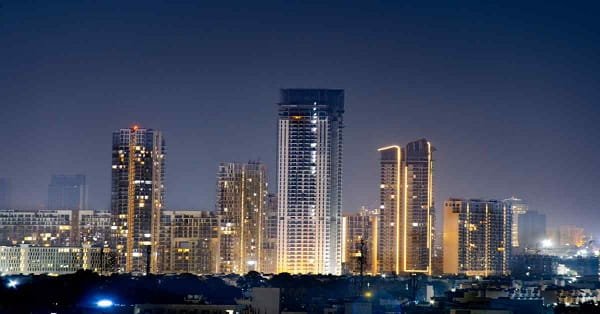
Kolkata has a reputation in India’s real estate conversation that this city’s residents find both accurate and slightly frustrating. It is always described as stable. Always affordable. Always dependable. Rarely exciting. Rarely the subject of dramatic appreciation headlines. The restless investor looking for quick triple-digit returns in twenty-four months consistently looks past Kolkata toward Gurugram or Noida or Hyderabad.
What 2026 data is quietly revealing is that Kolkata’s steady, unglamorous approach to property market performance is delivering something that several of its more celebrated counterparts cannot: genuine value growth driven by real demand, healthy inventory absorption, rising gross rental yields that rank among the highest in India, and a market that is broadening across segments — from the affordable mid-market that has always been Kolkata’s strength to a genuinely emerging premium and luxury segment that is growing at rates that would surprise anyone whose Kolkata market knowledge is more than two years old.
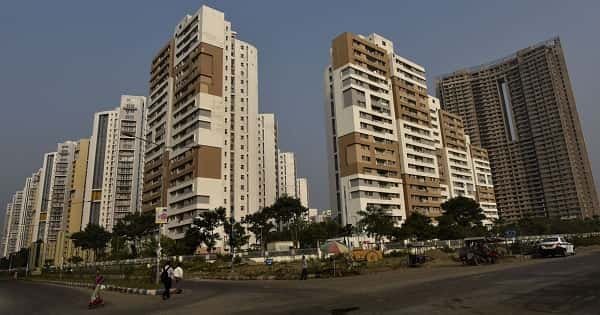
Kolkata Real Estate Overview 2026
Kolkata is India’s third-largest metropolitan area by population, the capital of West Bengal, and the commercial capital of eastern India. Its economy encompasses finance, IT and ITeS services, manufacturing, port and logistics activity, and a growing services sector. The city’s major employers include TCS, Cognizant, Infosys, Wipro, and dozens of smaller IT firms concentrated in Salt Lake’s Sector V technology park and in the New Town-Rajarhat corridor. The financial sector’s presence — including major insurance, banking, and financial services offices in the central business district around Dalhousie and Park Street — adds a stable professional employment base that sustains steady housing demand independent of IT sector cycles.
The city’s geography divides cleanly into zones with distinct property market characters. Central Kolkata (around Park Street, Alipore, Ballygunge, and the southern end of Chowringhee) is the most premium, most historically established residential area. North Kolkata (Shyambazar, Barasat, Barrackpore, Madhyamgram) is the most affordable, serving the working-class and lower-middle-income buyer demographic. South Kolkata (Behala, Garia, Joka, Sonarpur, Tollygunge) is the most diverse, spanning both affordable peripheral areas and well-established mid-premium zones. East Kolkata (Salt Lake, New Town, Rajarhat, EM Bypass) is the technology and planned development corridor — the zone attracting the most IT-sector buyer demand and the most NRI investment.
Current Market Status: Q1 2026 Data
Q1 2026 produced some of the most encouraging numbers in Kolkata’s recent property history. Total residential sales reached 4,043 units — a 5% year-on-year growth in a period when India’s overall top-eight-city residential market actually declined by approximately 4%. Kolkata outperformed the national trend decisively, driven by genuine end-user demand rather than speculative buying.
Launches kept pace with absorption: 3,475 new units were launched in Q1 2026, creating a healthy supply-demand balance that supports price stability without creating oversupply pressure. The weighted average property price reached ₹5,937 per square foot — a 3% year-on-year increase from ₹5,748 in Q1 2025. Unsold inventory declined 7%, falling to 19,062 units from 20,595, and the quarters-to-sell ratio improved to 4.4 from 5.0 the previous year — both signals of faster absorption and healthier market dynamics.
The segment-level data tells an even more compelling story. The ₹1 crore to ₹2 crore bracket grew 50% year-on-year, reaching 660 units sold. The ₹5 crore to ₹10 crore segment recorded a 163% year-on-year surge. The ₹10 crore to ₹20 crore ultra-premium category saw 13 units — a small number in absolute terms but a dramatic growth rate for a city historically not associated with ultra-luxury real estate. Together, these premium segment surges confirm that Kolkata’s market is meaningfully diversifying upward.
The affordable segment remains the volume driver: homes priced below ₹1 crore contributed nearly 73% of all Q1 2026 residential sales, reflecting the city’s fundamental character as an end-user, affordability-driven market. But the luxury layer is building above this foundation in a way that was not visible even three years ago.
Property Prices Across Kolkata’s Key Zones
Central and South-Central Kolkata: (Alipore, Ballygunge, Park Street, Bhowanipore, Kalighat) is the city’s most premium residential zone. Properties in Alipore and Ballygunge represent Kolkata’s closest equivalent to South Delhi or Worli — historic addresses with finite supply, consistent HNI demand, and appreciation that benefits from scarcity rather than infrastructure catalysts. Average rates range from ₹10,000 to ₹18,000 per square foot in established apartment buildings, with premium bungalow and villa properties commanding significantly higher prices. JLL data notes that Kolkata’s residential market has seen 6 to 12 percent annual capital value appreciation across various submarkets, with legacy-scarcity zones like Ballygunge and Alipore achieving the upper end.
East Kolkata — Salt Lake, New Town, Rajarhat, EM Bypass: is the most dynamic investment zone, driven by IT sector employment and the progressive development of New Town as Kolkata’s planned smart city extension. Rajarhat property rates range from ₹5,000 to ₹8,500 per square foot, with buyers who entered in 2020 to 2022 having already seen gains exceeding 40%. NRI investment in Rajarhat surged 36% recently, reflecting growing international confidence in the corridor’s fundamentals. Rental yields of 5 to 7% — supported by IT park employment — make Rajarhat one of the best yield-generating residential investment zones in eastern India.
South Kolkata: (Behala, Joka, Tollygunge, Garia, Sonarpur) serves the broad mid-market. Garia, Behala, and Tollygunge range from ₹4,000 to ₹5,500 per square foot — accessible mid-segment pricing that attracts working professionals and families priced out of Central Kolkata’s premium addresses. Joka, in the far south, benefits specifically from the IIM Calcutta campus proximity and the Purple Line metro’s progressive extension toward Esplanade.
North Kolkata: remains the most affordable zone. Areas like Barasat, Agarpara, and New Barrakpur offer housing up to ₹3,000 per square foot — Kolkata’s entry-level market for first-time buyers. Dum Dum, Lake Town, and Nager Bazar in the mid-north range from ₹4,000 per square foot upward, benefiting from proximity to the Kolkata International Airport and the Jessore Road connectivity.
Metro Expansion: The 2026–2028 Catalyst
Kolkata’s metro network expansion is reshaping residential demand across all four city quadrants, and represents the most significant single driver of future appreciation for buyers who position themselves correctly.
The Orange Line (New Garia to Airport) — a 29 km corridor linking South Kolkata directly to the airport via EM Bypass and Salt Lake Sector V — is targeted for full commissioning by December 2026. Properties within one kilometre of new metro stations along this line have already recorded 15 to 40% price increases. When fully operational, the Orange Line will create a price catalyst for the EM Bypass, Ultadanga, and airport-proximate zones that is already being partially priced in by well-informed buyers.
The East-West Metro (Green Line) — which includes India’s first underwater metro tunnel beneath the Hooghly River — currently runs from Howrah Maidan to Sealdah and Salt Lake Sector V to Phoolbagan. The remaining Esplanade-Sealdah gap of 2.5 km — delayed by the well-documented Bowbazar land subsidence — is expected to close by late 2026. Full connectivity across Howrah to Salt Lake will fundamentally improve the commutability of North Kolkata’s Howrah-adjacent zones.
The Purple Line (Joka to Esplanade) — currently operational from Joka to Majerhat — is extending underground toward Park Street and Esplanade, with full completion targeted for 2028. Behala and Joka are specifically benefiting from speculation ahead of this extension, which will make south-western Kolkata dramatically more accessible from the central business district.
Rental Market and Investment Yields
Kolkata offers gross rental yields of approximately 5.79% — ranking second only to Delhi among India’s major cities and significantly ahead of Mumbai’s 3.84%. This yield advantage reflects the city’s more accessible entry prices relative to rental incomes rather than any yield compression from oversupply. For investors prioritising income over speculation, Kolkata’s combination of lower entry price, higher relative yield, and steady appreciation provides a risk-adjusted return profile that Mumbai and Gurugram’s premium segments cannot match.
Forecast: 2026 to 2028
JLL’s institutional research projects continued capital value appreciation of 6 to 12% annually across Kolkata submarkets. The Orange Line’s December 2026 commissioning is the nearest-term catalyst that will drive disproportionate appreciation in its influence zones. The emerging luxury segment — driven by Central Kolkata’s supply scarcity and HNI demand — will continue to grow faster than the overall market average. The affordable mid-market will remain the volume anchor of Kolkata’s real estate story, supported by consistent first-time buyer demand and the RBI’s stabilised home loan rates around 7%.
Areas to Watch in Kolkata 2026
Rajarhat and New Town for IT-linked investment with proven rental yields. EM Bypass corridor for luxury investment with Orange Line metro catalyst. Joka and Behala for south-western mid-market appreciation ahead of Purple Line completion. Ballygunge and Alipore for scarcity-driven premium value preservation. Salt Lake for institutional-quality rental investment near Sector V technology park.
FAQs
Q: What are the average property prices in Kolkata in 2026?
A: The weighted average price in Kolkata reached approximately ₹5,937 per square foot in Q1 2026. Prices range from below ₹3,000 per square foot in the most affordable North Kolkata periphery to ₹10,000 to ₹18,000 per square foot in Central Kolkata’s premium Alipore and Ballygunge addresses. Rajarhat ranges from ₹5,000 to ₹8,500 per square foot.
Q: Why did Kolkata outperform the national market in Q1 2026?
A: Kolkata recorded 5% residential sales growth in Q1 2026 while the national average for India’s top eight cities declined by approximately 4%. The city’s predominantly end-user-driven market, affordability advantage relative to other metros, steadily declining unsold inventory, and improving metro connectivity all contributed to this outperformance.
Q: What is Kolkata’s rental yield compared to other Indian cities?
A: Kolkata’s gross rental yield of approximately 5.79% ranks second among India’s major cities — ahead of Chennai, Bengaluru, and significantly ahead of Mumbai’s 3.84%. This yield advantage makes Kolkata particularly attractive for investors prioritising income returns alongside capital appreciation.
Q: How is the metro expansion affecting Kolkata’s property market?
A: Properties within one kilometre of new metro station locations have recorded 15 to 40% price increases. The Orange Line (targeting December 2026 completion), East-West Metro Esplanade gap closure, and Purple Line extension toward Esplanade are the three most significant near-term catalysts, each reshaping residential demand in their respective corridors.
Q: Is Kolkata real estate a good investment for NRI buyers?
A: Yes. NRI investment in Rajarhat specifically surged 36% recently, reflecting growing international confidence. Kolkata offers lower entry prices than comparable planned corridors in Pune or Navi Mumbai, rental yields of 5 to 7% in IT-linked zones, and long-term metro infrastructure catalysts that will compound appreciation for buyers who enter before full metro operationalisation.