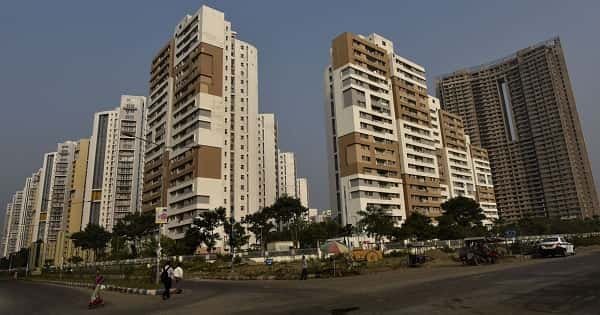
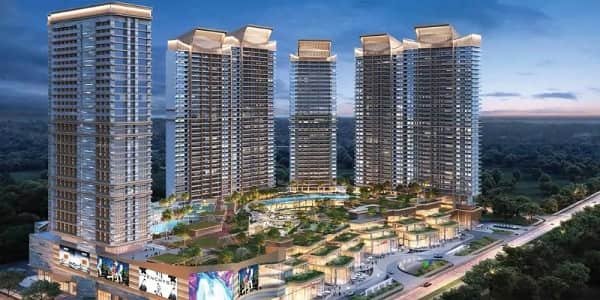
Mumbai’s real estate market entered 2026 in a condition that analysts describe with a word rarely applied to India’s most expensive and most complicated property market: maturity. The city that spent much of the 2010s as a speculative, developer-driven, hype-fuelled market where launch events generated subscriptions regardless of actual buyer intent has fundamentally transformed. In 2026, Mumbai’s property market is driven overwhelmingly by end-users rather than investors, by operational infrastructure rather than promised connectivity, and by realistic pricing calculations rather than aspirational valuations disconnected from income reality. The result is a market that is slower in its headline numbers but genuinely healthier in its underlying structure.
The headline numbers from the first half of 2026 are nonetheless extraordinary. Mumbai registered its strongest H1 property registration volumes in fourteen years — record-breaking month after month — across a market where the ₹1 crore to ₹2 crore segment now accounts for 38% of all registrations, up from 32% twelve months prior. Mid-segment demand is reshaping where developers build, what gets launched, and which localities attract the highest buyer traffic. The developer community has responded: 48% of Q1 2026 launches were tagged as mid-segment, a decisive pivot from the luxury obsession that dominated new launches through 2022 and 2023.
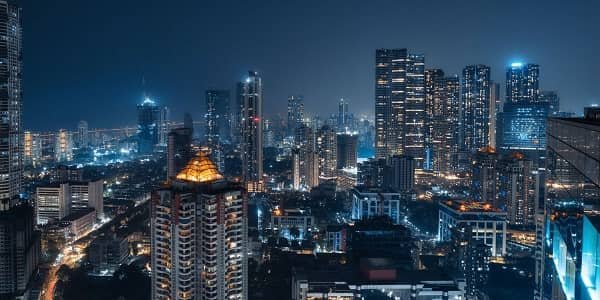
Mumbai Real Estate Overview 2026
Mumbai’s property market is the largest, most liquid, and most complex residential real estate market in India. The Mumbai Metropolitan Region (MMR) — encompassing not just the Brihanmumbai Municipal Corporation area but extending to Thane, Navi Mumbai, Mira-Bhayandar, Vasai-Virar, and the emerging NAINA zones — spans a geography of extraordinary variety in terms of pricing, infrastructure maturity, buyer profile, and investment logic. Understanding Mumbai’s property market requires thinking at the corridor level rather than the city level, because the same metropolitan region contains both India’s most expensive residential real estate (Malabar Hill at ₹80,000 to ₹1,20,000 per square foot) and some of its most accessible mid-market entry points (Vasai-Virar at ₹6,000 to ₹9,000 per square foot).
The city’s defining structural characteristic — the one that has sustained property prices through every economic cycle — is permanent land scarcity in the most desirable locations. Mumbai is a peninsula. Its most sought-after addresses are geographically finite. This constraint has kept South Mumbai, the Western Suburbs premium belt, and the established Central Suburb localities on a long-term upward trajectory despite cyclical slowdowns, because new supply in these zones is always limited by the physics of the available land.
Current Market Status: Property Prices Across MMR
Property rates across Mumbai’s key zones in 2026 reflect a wide spectrum driven entirely by connectivity, infrastructure maturity, and micro-location fundamentals.
South Mumbai — Malabar Hill, Nariman Point, Cuffe Parade, Colaba, Marine Lines — remains India’s most expensive residential market at ₹55,000 to ₹1,20,000 per square foot for premium apartments. Demand here is driven by HNIs, UHNIs, and NRI buyers for whom this address carries social and commercial meaning beyond mere residential utility. New supply is extremely limited; most transactions are resale of existing inventory.
Western Suburbs (Andheri, Borivali, Kandivali, Malad) form the backbone of end-user mid-market demand. Property rates range from ₹18,000 to ₹35,000 per square foot depending on the specific locality and project quality. Metro Line connectivity has been a significant price catalyst across this belt, with localities near operational metro stations outperforming their non-metro-connected neighbours in both price appreciation and transaction volume.
Central Suburbs (Chembur, Powai, Vikhroli, Bhandup, Ghatkopar) are experiencing some of the most consistent appreciation in 2026. Prices range from ₹20,000 to ₹45,000 per square foot. Chembur specifically — with its Metro Line 2B connectivity, Eastern Freeway proximity, and consistent redevelopment pipeline — has emerged as one of 2026’s strongest mid-premium value propositions in the city.
Thane (Ghodbunder Road, Majiwada, Kolshet, Pokhran Road) offers some of the most affordable mid-segment housing within practical commuting distance of Mumbai’s employment hubs, ranging from ₹12,000 to ₹22,000 per square foot. Thane’s well-planned township developments and improving metro connectivity have sustained demand that keeps the city’s absorption rates among the highest in MMR.
Navi Mumbai (Kharghar, Panvel, Ulwe, Vashi, Nerul) benefits most specifically from the Navi Mumbai International Airport’s December 2025 commercial launch, which has created a structural appreciation catalyst for the zone’s most airport-proximate localities. Prices range from ₹9,000 per square foot in Ulwe to ₹25,000 per square foot in premium Vashi addresses.
Key Infrastructure Drivers in 2026
The most reliable predictor of Mumbai property appreciation in 2026 and beyond is operational infrastructure — not promised or under-construction infrastructure, but connectivity already changing daily commute behaviour. Several major projects are reshaping demand patterns.
The Mumbai Metro expansion — particularly Line 3 (the 33.5 km underground corridor connecting Cuffe Parade to SEEPZ, operational since 2024) — has had its most visible price impact in 2026 along the Dadar, Shivaji Park, BKC, and Aarey corridors. Properties within walkable distance of Line 3 stations have outperformed the city average in both price growth and transaction velocity.
The Mumbai Trans Harbour Link (Atal Setu) — the 21.8 km sea bridge connecting Sewri to Nhava Sheva, operational since January 2024 — has brought Navi Mumbai within twenty to thirty minutes of South Mumbai by car, fundamentally altering the residential calculus for buyers employed in South Mumbai’s financial district who previously considered Navi Mumbai impractical as a primary residence.
The Mumbai Coastal Road, connecting Worli to Bandra along the western seafront and reducing travel times significantly along the western corridor, has supported premium pricing in Worli, Prabhadevi, and Bandra areas where it has most directly reduced commute pain.
Rental Market and Investment Yields
Mumbai’s rental market in 2026 is performing with specific strength in employment-linked corridors. BKC, Lower Parel, Nariman Point, and Powai command consistent executive tenancy that keeps vacancy rates low in well-managed developments. Rental inflation of seven to nine percent was recorded across key Mumbai corridors in 2025, and 2026 is expected to maintain similar momentum.
Gross rental yields in Mumbai remain modest relative to other Indian cities — approximately 3.84% on average — reflecting the high absolute capital values against which rent percentages are calculated. Investors entering Mumbai real estate for yield alone will find the equation less compelling than Chennai or Hyderabad. The city’s investment case rests primarily on capital appreciation over long holding periods rather than yield maximisation.
Forecast: H2 2026 and Beyond
A Reuters poll of property analysts conducted in early 2026 projects 5 to 7 percent annual price appreciation for Mumbai residential real estate over the next three years. This aligns with the market’s structural fundamentals: genuine supply constraints in prime locations, strong end-user demand, RBI rate stabilisation that has brought best home loan rates toward 7% — the lowest since 2022 — and infrastructure investment that continues to unlock new demand corridors.
The ₹1 crore to ₹2 crore mid-segment is expected to remain the strongest demand zone by volume. Premium micro-markets like Worli, Bandra, and South Mumbai may outperform the city average if luxury demand remains robust. NMIA-adjacent areas of Dronagiri, Ulwe, and Panvel could see disproportionate appreciation as the new airport’s operational scale builds through late 2026 and 2027.
The primary risk to this forecast is affordability pressure. Mumbai’s price-to-income ratio is currently in the 9x to 10x range — among the highest in Asia — meaning that any significant further price increase without corresponding income growth risks reducing the pool of qualified buyers and slowing transaction velocity. The market’s shift toward mid-segment development is partially a structural response to this affordability ceiling, and sustaining transaction volume through 2026 and 2027 requires the mid-segment to remain accessible to working professionals rather than drifting upward in price to match the premium segment’s appreciation.
Areas to Watch in Mumbai 2026
Navi Mumbai’s airport-adjacent zones (Ulwe, Dronagiri, Panvel) for infrastructure-led appreciation. Chembur for established mid-premium value with genuine multi-modal connectivity. Borivali-Kandivali for Western Suburbs end-user demand supported by metro access. Thane’s Ghodbunder Road for affordable township living with consistent absorption. BKC for luxury and commercial-adjacent investment grade property.
FAQs
Q: What is the average property rate in Mumbai in 2026?
A: Property rates in Mumbai in 2026 range from approximately ₹12,000 per square foot in the most affordable MMR periphery zones to ₹1,20,000 per square foot in South Mumbai’s most premium addresses. The mid-market sweet spot across the Western and Central Suburbs ranges from ₹18,000 to ₹40,000 per square foot depending on locality and project quality.
Q: Is 2026 a good time to buy property in Mumbai?
A: Yes, particularly for end-users. The market is in a clarity-driven phase — infrastructure is operational rather than promised, developer credentials are verifiable through RERA, and home loan rates have stabilised near seven-year lows around 7%. It is not a market for speculative short-term flipping but offers strong long-term appreciation fundamentals for buyers who choose locations and projects carefully.
Q: Which areas in Mumbai are showing the strongest appreciation in 2026?
A: Chembur, Navi Mumbai’s airport-adjacent localities (Ulwe, Panvel), Western Suburb metro-connected zones, and Thane’s Ghodbunder Road corridor are showing above-average appreciation in 2026. The common factor across all of these is recently operational or significantly improved infrastructure connectivity.
Q: What is the rental yield in Mumbai real estate?
A: Average gross rental yields in Mumbai are approximately 3.84% — lower than many other Indian cities due to the high capital value base. In employment-linked corridors near BKC, Lower Parel, and Powai, yields are slightly higher due to sustained executive tenant demand and limited ready-to-move inventory.
Q: What does the Mumbai property market forecast look like for 2027–2028?
A: Analysts project 5 to 7 percent annual price appreciation through 2026 to 2028, driven by continued infrastructure execution, sustained end-user demand, and limited supply in prime locations. Premium localities may outperform. The primary risk is affordability pressure from the high price-to-income ratio, which could moderate transaction volumes if prices rise faster than incomes.