There is a particular kind of real estate market that India’s smaller, more self-contained cities offer — and Vadodara in 2026 represents that opportunity more completely than perhaps any other Gujarat city. It is not a market generating dramatic newspaper headlines or benchmark-setting luxury auction prices. It is a market doing something arguably more valuable for the buyers who recognise it: delivering consistent, moderate, sustainable property appreciation in a city that offers excellent quality of life, strong industrial employment, outstanding educational institutions, and significantly lower entry prices than Gujarat’s better-known real estate destinations of Ahmedabad and Surat.
Vadodara — also known as Baroda, the cultural capital of Gujarat, the home of Maharaja Sayajirao University, the Lakshmi Vilas Palace, and one of India’s most important industrial clusters in chemicals, pharmaceuticals, engineering, and manufacturing — is experiencing a genuine real estate market evolution in 2026 that deserves serious attention from buyers and investors who look beyond the obvious metros.
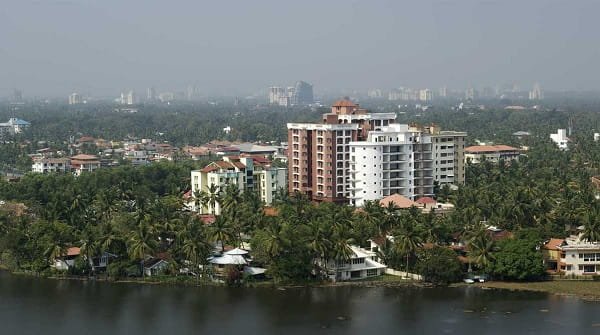
Vadodara Real Estate Overview 2026
Vadodara’s economy sits on a diversified industrial and institutional foundation that creates stable housing demand across multiple buyer categories simultaneously. The Makarpura and Manjusar industrial areas house significant chemical, pharmaceutical, engineering, and heavy manufacturing units — some of India’s largest industrial employers in their respective sectors, including IOCL, BPCL, and multiple private sector manufacturing giants. The city’s educational infrastructure — including MS University, PDPU, GLS, and numerous engineering and medical colleges — generates continuous student-and-faculty-housing demand that sustains the rental market independently of industrial employment cycles.
The city’s location on National Highway 48 (Delhi-Mumbai), the Western Railway main line with direct connections to Mumbai and Delhi, and the expanding Vadodara International Airport (recently enhanced) make it one of the most practically connected Tier-2 cities in India. The Dedicated Freight Corridor passing through Vadodara is progressively opening new logistics and warehousing employment that adds another demand layer to the city’s residential market.
Gujarat’s overall economic trajectory — driven by the government’s consistent industrial policy, the Vibrant Gujarat Summit’s investment commitments, and the state’s manufacturing-first orientation — provides the macroeconomic tailwind that supports Vadodara’s steady growth.
Current Market Status: Property Prices Across Vadodara
Vadodara’s most important characteristic from an investment perspective is its price level. Compared to Ahmedabad or Surat — Gujarat’s other major cities — Vadodara’s property prices remain meaningfully more affordable, creating a genuine value entry point for buyers who understand the city’s fundamentals.
Premium Localities — Alkapuri, Race Course Road, Sayajibaug area, Fatehgunj — are the city’s established premium residential addresses. Alkapuri’s central location, proximity to the Sayajibaug gardens, and the city’s most prestigious civic infrastructure make it Vadodara’s equivalent of a South Delhi or Koramangala — limited in available land, consistent in HNI demand, and stable in appreciation. Rental yields in Alkapuri and Race Course Road are among the city’s strongest at 6.6% to 6.8%, reflecting the consistent demand from professionals and business families who prefer these established addresses. Average rates in prime Alkapuri range from ₹6,000 to ₹9,000 per square foot.
Active Residential Growth Corridors — Gotri, Subhanpura, Gotri-Sevasi Road, Vasna-Bhayli Road, Waghodia Road — are where Vadodara’s most active market momentum is concentrated in 2026. These zones have the highest price appreciation data in the city: Tarsali recorded 34.7% three-year appreciation, Subhanpura 32.9%, and Gotri Road 29.8% — meaningful absolute appreciation numbers that validate the investment case for these corridors. These are the areas attracting new residential projects from both local Vadodara developers and national players like Godrej Properties who are recognising the city’s growth potential. Typical apartment prices in Gotri, Subhanpura, and the Vasna-Bhayli Road corridor range from ₹4,000 to ₹7,000 per square foot — significantly lower than comparable quality addresses in Ahmedabad or Surat for similar distance from the city centre.
Emerging Peripheral Zones — New Gotri, Bhayli, Sama-Savli Road, Ajwa Road, Waghodia Road beyond the established belt — are fast developing into residential zones serving both the city’s expanding working population and the long-term investor seeking entry at the lowest available price points. Affordable areas like Halol, Makarpura, Waghodia Road, and Ajwa Road offer housing from ₹2,250 to ₹2,950 per square foot — entry-level pricing that produces real appreciation returns for patient buyers.
Industrial Belt Proximity — Makarpura, Padra Road, Halol — the areas proximate to Vadodara’s major industrial zones see consistent demand from working professionals employed in chemical, engineering, and manufacturing plants. These zones are more cyclically sensitive to industrial employment conditions but offer the city’s most accessible entry prices and the strongest correlation between housing demand and clearly identifiable employment proximity.
What Is Driving Vadodara’s Growth in 2026
Several specific factors have combined to accelerate Vadodara’s real estate market in 2026 relative to its historical pace.
The Vadodara Smart City Mission initiatives — including improved road networks, new flyovers, smart traffic management, and enhanced public utilities — have elevated the quality of everyday urban infrastructure in ways that directly improve the liveability of residential areas and therefore their desirability to buyers. The Ring Road completion around specific Vadodara zones has improved cross-city connectivity and opened new development potential in areas previously considered peripheral.
The expanding educational institution landscape — new engineering campuses, management institutes, and medical colleges being established on the city’s periphery — is creating student housing demand in surrounding areas while also establishing those areas’ long-term residential viability.
The Dedicated Freight Corridor’s impact on Vadodara’s logistics economy is progressive but real — new warehousing and logistics park developments are generating employment that translates into housing demand in the city’s northern and western corridors close to the freight corridor alignment.
Vadodara Airport’s enhancement and expanded connectivity (with new direct routes being progressively added) is increasing the city’s accessibility for both business visitors and NRI buyers from the Gujarati diaspora who find Vadodara’s cultural familiarity, lower price point, and improving infrastructure an attractive combination for residential investment.
Rental Market and Investment Yields
Vadodara’s rental market offers some of the most impressive yield numbers in India’s Tier-2 city landscape. Gorwa — a residential area with good industrial proximity — generates rental yields of 9.3%, the highest in the city. Alkapuri and Subhanpura follow at 6.8% and 6.7% respectively. Race Course Road at 6.6% and Sayaji Park Society at 6.3% complete the top-five yield locations.
These yields reflect the specific dynamics of a city where property prices remain low relative to rental income, because the rental market is sustained by a consistent flow of industrial workers, students, and young professionals who are not yet in a position to purchase but need quality rental accommodation. For investors deploying capital at Vadodara’s relatively low absolute prices, these yields — combined with the 30% three-year appreciation recorded in the best-performing corridors — produce total returns that many larger city investments struggle to match.
Competitive Advantages Against Other Markets
The most compelling framing for Vadodara in 2026 is the comparison it offers to other Gujarat and national markets. Against Ahmedabad — Gujarat’s largest city — Vadodara offers lower absolute prices, lower urban congestion, better liveability metrics, and a more manageable urban scale. Against Surat — Gujarat’s fastest-growing commercial city — Vadodara offers different economic characteristics (industrial and institutional rather than diamond and textile trading) but comparable or superior infrastructure quality at lower prices.
Against national Tier-2 alternatives like Jaipur, Lucknow, or Nagpur, Vadodara offers the specific advantage of operating within Gujarat’s economic ecosystem — one of India’s most consistently business-friendly state economies — which provides a level of policy stability and industrial investment continuity that less economically robust states cannot guarantee.
Forecast: 2026 to 2028
Vadodara’s property market is expected to deliver 6 to 10% annual price appreciation in established corridors and potentially higher in the rapidly developing Gotri-Subhanpura-Vasna Bhayli belt, where three-year appreciation has already exceeded 30%. The city is not in a speculative phase — demand is real, end-user driven, and supported by verifiable employment growth. The entry price advantage relative to other Gujarat cities means the appreciation story has further runway before Vadodara’s prices converge with Ahmedabad’s, a convergence that patient investors expect over a five to seven year horizon.
Areas to Watch in Vadodara 2026
Gotri and Gotri-Sevasi Road for established mid-premium appreciation with proven track record. Subhanpura for highest three-year appreciation in the city at 32.9%. Vasna-Bhayli Road and Waghodia Road for new residential developments at accessible entry prices. Alkapuri for premium address stability and strong rental yields. New Gotri and Sama-Savli Road for emerging zone entry with long-horizon appreciation potential.
FAQs
Q: What are property rates in Vadodara in 2026?
A: Property rates in Vadodara range from ₹2,250 to ₹2,950 per square foot in the most affordable peripheral areas, to ₹4,000 to ₹7,000 per square foot in the active growth corridors of Gotri, Subhanpura, and Vasna-Bhayli Road, to ₹6,000 to ₹9,000 per square foot in premium Alkapuri and Race Course Road addresses.
Q: Which areas in Vadodara have seen the strongest price appreciation?
A: Tarsali recorded 34.7% three-year price appreciation — the city’s strongest. Subhanpura followed at 32.9% and Gotri Road at 29.8%. These three corridors represent the city’s most active growth zones and have the deepest pipeline of new residential project development.
Q: What rental yields does Vadodara offer?
A: Vadodara offers exceptional rental yields by Indian Tier-2 city standards: Gorwa at 9.3%, Alkapuri at 6.8%, Subhanpura at 6.7%, Race Course Road at 6.6%, and Sayaji Park Society at 6.3%. These yields reflect the healthy demand from industrial workers, students, and young professionals in a city where property prices remain below the level at which rental mathematics no longer works.
Q: Is Vadodara a good alternative to Ahmedabad for real estate investment?
A: Yes, for specific buyer profiles. Vadodara offers lower absolute entry prices than comparable Ahmedabad addresses, similar Gujarat economic ecosystem exposure, a more manageable urban scale with less congestion, and specific industrial and institutional employment anchors that sustain housing demand independently of Ahmedabad’s textile and diamond trading cycle. For buyers seeking Gujarat exposure at lower prices with strong yield, Vadodara is compelling.
Q: What is driving Vadodara’s real estate market growth in 2026?
A: Key drivers include the Dedicated Freight Corridor generating new logistics employment, the Smart City infrastructure improvements elevating liveability, expanding educational institutions creating student housing demand, Vadodara Airport’s enhanced connectivity attracting NRI investment, and national developers’ recognition of the city as a growth opportunity — signalled by the entry of brands like Godrej Properties into the Vadodara market.