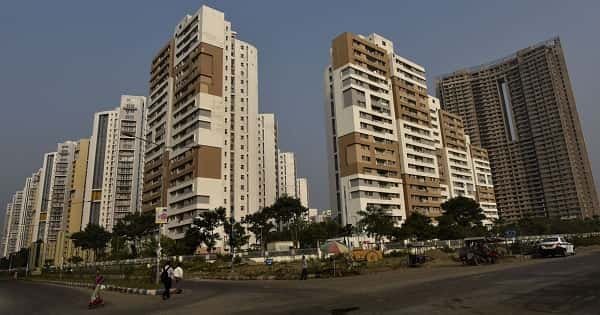
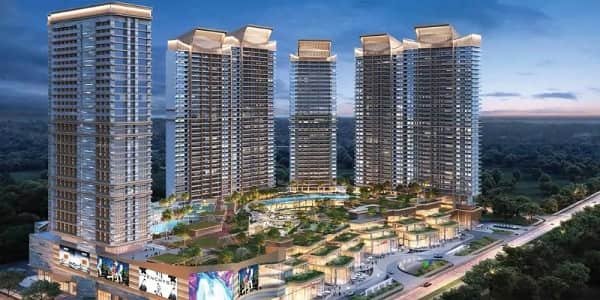
Hyderabad has a compelling and specific claim to make in India’s real estate landscape in 2026 that no other city can quite replicate. It is simultaneously the country’s fastest-growing real estate market by price appreciation CAGR, one of its most affordable major metro cities by absolute square foot pricing, among its safest and most liveably governed urban environments, and the second-largest hub for multinational technology and Global Capability Centre employment after Bengaluru. This combination — rapid growth, relative affordability, quality governance, and structural employment demand — is what makes Hyderabad the most frequently cited investment recommendation among real estate professionals who are asked to name the single best value major city in India in 2026.
The numbers validate the claim. Property prices across Hyderabad have grown at a CAGR of 14 to 16% over the past five years — the highest sustained residential appreciation rate of any major Indian metro. Total residential sales volumes crossed 3.95 lakh units in 2025 — a 14% year-on-year jump reflecting the depth and breadth of genuine demand. Hyderabad registered 9,541 residential unit sales in Q1 2026 — a slight year-on-year growth of 1% despite a period when several other major Indian cities recorded sales declines — and average property rates increased 9% year-on-year to approximately ₹8,211 per square foot. Independent forecasts project Hyderabad will sustain the highest real estate CAGR among all Indian metros through 2030.

Hyderabad Real Estate Overview 2026
Hyderabad’s economic engine is powered by India’s second-largest IT and ITeS cluster, employing over 6 lakh professionals across more than 1,500 firms. The western corridor anchored by HITEC City, Gachibowli, and the Financial District is home to the majority of multinational technology employers including Amazon, Microsoft, Apple, Google, Micron, and Meta — all of whom have expanded their Hyderabad footprints significantly over the past three years. The city added 12 to 14 million square feet of new Grade-A office space in recent years, with Cushman and Wakefield’s Q1 2026 report confirming gross leasing of 3.15 MSF in the quarter alone — strong, fundamentals-driven commercial real estate demand that directly generates residential buying and rental demand in adjacent zones.
Beyond IT, Hyderabad hosts the Rajiv Gandhi International Airport’s growing cargo and passenger infrastructure, the Hyderabad Pharma City project (the world’s largest planned pharmaceutical manufacturing cluster at Mucherla), significant defence manufacturing and aerospace investment, and the Telangana government’s consistently proactive approach to industrial policy that has maintained the city’s attractiveness for corporate investment.
The city’s governance environment — routinely ranked among India’s most efficient for corporate ease-of-doing-business — and its relatively lower cost of living compared to Bengaluru, Mumbai, and Delhi create a quality-of-life proposition that sustains in-migration of talented professionals who then create residential demand.
Current Market Status: Zone-Level Analysis
Hyderabad’s residential market is geographically concentrated in a western-dominated arc, with significant emerging activity in the north and select eastern corridors.
West Hyderabad — HITEC City, Gachibowli, Kokapet, Financial District, Nanakramguda is the city’s most mature and most premium residential zone. Cushman and Wakefield’s Q1 2026 report confirms the West zone led launches at 65% of total quarterly supply. HITEC City and Gachibowli rental values have increased 16% and 24% respectively in recent periods — the most aggressive rental appreciation of any Hyderabad micro-market. Kokapet is described as “the next Gachibowli” by market analysts — premium apartments range from ₹9,000 to ₹15,000 per square foot, with luxury projects exceeding ₹18,000 per square foot, and ROI potential of 12 to 14% annually with rental yields of 4 to 6%. For investors seeking the highest total returns (capital appreciation plus yield) in Hyderabad, Kokapet is the most compelling current destination.
Tellapur and Nallagandla — sitting between the Financial District and Gachibowli — offer the western corridor’s best value proposition in 2026. Tellapur is positioned as a premium residential corridor with ORR connectivity, proximity to Samashti International School and Glendale International, and rates in the ₹7,000 to ₹9,500 per square foot range. Nallagandla averages ₹6,500 to ₹9,000 per square foot, offering 10 to 12% annual growth potential with strong rental demand from IT professionals.
North-West Hyderabad — KPHB, Kukatpally, Miyapur, Kompally, Bachupally is where Hyderabad’s mid-market buyer is most active. Metro Red Line connectivity through Miyapur and KPHB — direct access to HITEC City — has made this corridor one of the best-connected affordable residential zones in the city. Miyapur apartments average below ₹7,000 per square foot for most projects, with 9 to 11% annual growth trajectory. Bachupally and Kompally serve the larger format township market with families seeking more space at sub-₹6,500 per square foot pricing.
North Hyderabad — Balanagar, Medchal, Alwal, Dundigal is the market’s emerging growth frontier, driven by industrial employment in the north-western industrial corridors, improving ORR connectivity, and significantly lower land prices that allow entry at ₹4,000 to ₹6,000 per square foot. Balanagar specifically contributed 19% of Q1 2026 new launches according to Cushman and Wakefield. For patient investors with a seven to ten year horizon, North Hyderabad represents the highest potential appreciation from a lower base.
Established Central Locations — Banjara Hills, Jubilee Hills, Somajiguda, Begumpet remain the city’s premium urban addresses for buyers seeking established lifestyle infrastructure, proximity to top-tier private schools, and the city’s best retail and dining environments. Properties here range from ₹10,000 to ₹18,000 per square foot for quality apartment inventory, with limited new supply ensuring value preservation.
The Price Advantage That Defines Hyderabad’s Investment Case
The most often cited and most consistently validated investment argument for Hyderabad in 2026 is price relative to comparable infrastructure and lifestyle. Hyderabad’s average price of ₹6,000 to ₹11,000 per square foot depending on micro-market compares against Bangalore’s ₹9,000 to ₹15,000 per square foot, Mumbai MMR’s ₹15,000 to ₹35,000 per square foot, and Gurugram’s ₹9,000 to ₹20,000 per square foot. A buyer gets comparable IT employment access, comparable or better urban planning quality, comparable or better governance, and at least 30 to 40% lower absolute capital cost in Hyderabad relative to Bangalore or Delhi NCR.
This price gap has been progressively narrowing as Hyderabad’s market matures — which is precisely the appreciation story that investors who entered in 2020 to 2022 have benefited from most dramatically. The narrowing will continue as Hyderabad’s reputation as a corporate destination deepens, but the gap is still wide enough in 2026 to represent genuine value for buyers comparing alternatives across Indian metros.
Infrastructure Driving Future Value
Hyderabad Metro Phase 2 — extending connectivity to Shamshabad Airport, HITEC City via new alignments, and broader city coverage — is the most significant near-term infrastructure catalyst. Metro Phase 2 stations are expected to generate 15 to 25% property appreciation premiums in adjacent localities consistent with the pattern established by Phase 1.
The Outer Ring Road has already fundamentally expanded the city’s viable residential geography, and ongoing ORR upgrades and new radial connections to it continue to unlock new corridors. The proposed Regional Ring Road — connecting Hyderabad’s satellite towns at 158 km — is the most ambitious long-term infrastructure project, expected to open new residential development zones beyond the current ORR belt when progressively delivered.
Hyderabad Pharma City at Mucherla — the world’s largest planned pharmaceutical manufacturing cluster — is expected to generate significant employment in Hyderabad’s south-western quadrant, creating residential demand in areas currently priced at entry levels.
Rental Market
Rental yields in Hyderabad average 3 to 5% depending on locality, with premium zones like Kokapet and Gachibowli achieving 4 to 6%. For investors, the total return on investment combining rental yield with capital appreciation typically ranges from 12 to 18% annually in premium locations — a return profile that justifies Hyderabad’s positioning as India’s most compelling major metro real estate investment destination in 2026.
Forecast: 2026 to 2028
Hyderabad property prices are expected to grow 10 to 20% over the next several years, with the highest appreciation in emerging corridors proximate to new office developments and Metro Phase 2 stations. The CAGR of 14 to 16% over the preceding five years may moderate to 10 to 14% going forward as the base price rises, but remains the highest projected appreciation rate among India’s major metros. Forecasts project Hyderabad will sustain this position through 2030.
Areas to Watch in Hyderabad 2026
Kokapet for maximum total return (appreciation plus yield) in the western premium corridor. Tellapur and Nallagandla for western corridor value with strong employment proximity. Miyapur and KPHB for mid-market metro-linked investment with affordable entry. Bachupally and Kompally for family-oriented township investment with North Hyderabad appreciation trajectory. Patancheru for long-horizon western corridor entry at the lowest current prices.
FAQs
Q: Why is Hyderabad considered India’s fastest-growing real estate market in 2026?
A: Hyderabad has delivered a property price CAGR of 14 to 16% over the past five years — the highest of any major Indian metro. This growth is driven by the largest concentration of multinational technology employers outside Bengaluru, consistently proactive Telangana government infrastructure investment, a favourable price-to-value ratio compared to other metros, and strong governance that maintains investor confidence.
Q: What are average property prices in Hyderabad in 2026?
A: Average property prices reached approximately ₹8,211 per square foot in Q1 2026 — a 9% year-on-year increase. Premium western corridor zones like Kokapet range from ₹9,000 to ₹15,000 per square foot. Established locations like Gachibowli average ₹5,000 to ₹10,000 per square foot. Affordable emerging corridors in North Hyderabad and Patancheru offer entry from ₹4,800 per square foot.
Q: What rental yields can investors expect in Hyderabad?
A: Rental yields average 3 to 5% depending on micro-market, with premium western corridor zones like Kokapet and Gachibowli achieving 4 to 6%. Combined total returns (yield plus capital appreciation) in premium locations typically range from 12 to 18% annually — among the highest of any Indian metro real estate market.
Q: How does Hyderabad compare to Bangalore for property investment in 2026?
A: Hyderabad offers comparable IT employment access and infrastructure quality at 30 to 40% lower absolute property prices than Bangalore’s prime IT corridors. Hyderabad’s CAGR of 14 to 16% exceeds Bangalore’s 6 to 10% projected growth. For investors seeking maximum appreciation from a relatively lower base with comparable employment-driven demand, Hyderabad presents the stronger investment case in 2026.
Q: Is Hyderabad real estate suitable for NRI investment in 2026?
A: Yes, strongly. Hyderabad’s transparent TS RERA framework, strong rental demand from IT professionals, quality gated community developments, favourable NRI investment framework, and the city’s consistent governance quality make it one of India’s top NRI investment destinations. High-end gated communities in Kokapet and Gachibowli see quick occupancy with lifestyle demand from NRI residents returning to India.