Agriculture insurance in India now moves faster than it once did, thanks to clearer timelines, satellite data, smartphone reporting and direct bank transfers. For a farmer, a quick settlement means money for the next sowing, loan repayment and household needs while the loss is still fresh. The process below is based on the Pradhan Mantri Fasal Bima Yojana (PMFBY), the main crop insurance scheme, and it shows what farmers and insurers do to keep claims on schedule. Scheme rules are updated from time to time, so check current guidelines with your bank, agriculture office or the official portal.
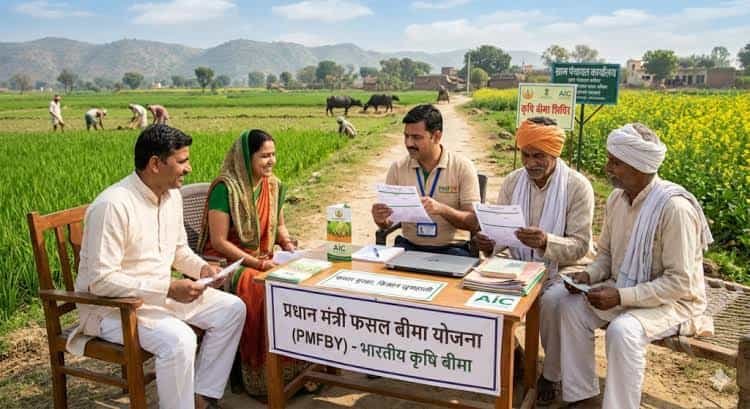
The Basics of a Crop Insurance Claim
Claims arise from different types of losses, and each follows a slightly different route.
- Localised calamities: hailstorm, landslide, flooding or inundation, cloudburst and natural fire affecting individual fields.
- Widespread yield loss: drought, pests, disease or excess rain affecting a whole area, measured by yield data.
- Prevented sowing: when conditions stop you from sowing at all.
- Mid-season adversity: a major setback during the season that may trigger part-payment.
- Post-harvest losses: damage to harvested crop left to dry in the field, within a short window.
Knowing which category your loss belongs to helps you act at the right time.
Step One: Report the Loss Quickly
Speed begins with the farmer. For localised calamities and post-harvest losses, notice must be given within 72 hours of the event. Farmers can report through several channels.
- The Crop Insurance mobile app.
- The national crop insurance helpline, 14447.
- The bank branch, insurance company office or agriculture department.
Reporting with a few photographs and the exact survey details helps the insurer verify the loss without delay.
Step Two: Technology Speeds Up Assessment
Insurers and state governments increasingly rely on technology, which reduces the time spent on field visits.
- Satellite and remote sensing: satellite imagery helps estimate crop condition and damage across large areas, supporting sampling and verification.
- Drones: used in some regions to assess damage in affected plots.
- Smartphone apps for crop cutting experiments: field staff record the harvest sample with photographs and location tags, which improves accuracy and cuts paperwork.
- Weather data: automatic weather stations feed rainfall, temperature and humidity records for weather-based schemes.
These tools give insurers evidence that is harder to dispute and faster to process.
Step Three: Yield Data and Crop Cutting Experiments
For area-based claims, the loss is calculated by comparing the actual yield with the threshold yield for the insured unit. Crop cutting experiments, where a small plot is harvested and weighed, supply the actual yield. State governments conduct them, and timely submission of yield data is a major factor in how quickly claims are settled.
Step Four: Claim Calculation and Approval
Once the yield figures or loss assessments are in, the insurer calculates the amount due. The calculation is based on the sum insured, the shortfall in yield and the farmer’s insured area. Clear rules and standard formulas reduce back-and-forth. The insurer then submits the claim to the relevant authorities for confirmation as needed.
Step Five: Direct Payment to the Farmer’s Account
Approved claims are transferred directly into the farmer’s bank account through direct benefit transfer. Digital disbursal systems have made it possible to release large numbers of claims in one go, which removes the delays of cheques and intermediaries. Keeping your Aadhaar-linked bank account details accurate helps the money arrive without hold-ups.
Timelines That Keep Settlements on Track
Under the scheme’s guidelines, claims are expected to be paid within a set period after yield data is received, commonly about two months from the cut-off date for yield data submission. Delays beyond the stated period can attract interest payable to the farmer under the rules. These timelines give insurers a clear deadline and give farmers a clear expectation.
What Farmers Can Do to Speed Up the Process
Before the Season
- Enrol before the cut-off date through your bank, a common service centre or the official portal.
- Check that your name, land details, crop and bank account are entered correctly.
- Keep your Aadhaar and bank account linked.
During the Season
- Keep the policy receipt and number handy.
- Note the date of any calamity and report it within 72 hours.
- Take clear, date-stamped photographs of the damage.
- Save the acknowledgement number of your complaint.
After the Loss
- Cooperate with surveyors and give accurate information.
- Follow up on your claim status through the app or helpline.
- Contact the district agriculture officer if you face a delay.
Common Reasons Claims Get Delayed
- Mismatch between land records and the details entered at enrolment.
- Incorrect or inactive bank account details.
- Late reporting of localised losses beyond the 72-hour window.
- Delay in receiving yield data from state authorities.
- Missing documents or unclear photographs.
Most of these are avoidable with careful paperwork at the start of the season.
Premium Basics Farmers Should Know
Under PMFBY, farmers pay a small share of the premium, commonly 2% of the sum insured for kharif food crops and oilseeds, 1.5% for rabi crops, and 5% for commercial and horticultural crops. The government shares the rest of the premium. Check the current rates for your state and crop, as these can be revised.
Other Schemes Worth Knowing
Weather-based crop insurance pays out when rainfall, temperature or humidity cross defined thresholds, which can speed up settlement since it does not need field-level yield measurement. Some states also run their own schemes and support programs, so ask your local agriculture office about what is available in your area.
Frequently Asked Questions
Q1. How quickly must a localised crop loss be reported?
Within 72 hours of the event, through the crop insurance app, the helpline or your bank or insurer.
Q2. How long does it take to receive a claim?
Under scheme guidelines, claims are generally expected within about two months of the yield data cut-off date, though timelines can vary.
Q3. How does the farmer receive the money?
Approved claims are transferred directly into the farmer’s bank account.
Q4. What documents help speed up a claim?
The policy receipt, land records, bank details, Aadhaar and clear photographs of the damage.
Q5. What is the crop insurance helpline number?
The national helpline is 14447.
Q6. What can I do if my claim is delayed?
Check status through the app, contact the insurer or bank, and approach the district agriculture officer or grievance channels if needed.