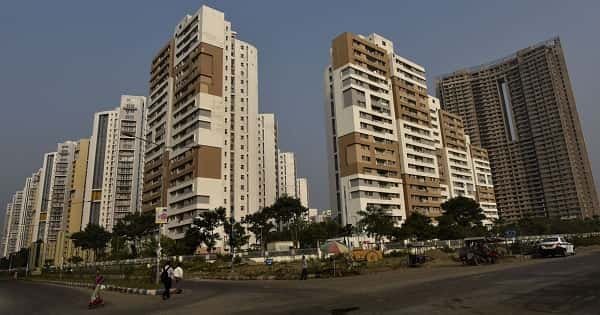
Bangalore — Bengaluru — is India’s technology capital, the Silicon Valley of the East, and the city that has produced more IT millionaires, startup unicorns, and global capability centre expansions than any other Indian urban area. Its real estate market is the direct expression of this identity: driven by employment, shaped by infrastructure, and priced by the competition between hundreds of thousands of IT professionals all wanting to live within a reasonable commute of their office campus. In 2026, Bangalore’s property market is simultaneously the most active, most analysed, and most debated in South India — and arguably the most structurally sound of any major Indian city.
The headline statistic from 2025 tells the foundational story: Bangalore launched 49,252 residential units — its highest ever annual launch volume, a 28% jump over 2024. East Bangalore’s Whitefield, Gunjur, Budigere Cross, and Hoskote accounted for 57% of Q1 2026 launches. Average residential prices rose from approximately ₹7,120 per square foot in 2023 to nearly ₹9,260 per square foot by 2025 — a 30% increase over two years. In prime IT corridors in 2026, rates range from ₹15,000 to ₹18,000 per square foot. These numbers represent genuine end-user-driven appreciation, not speculative inflation.

Bangalore Real Estate Overview 2026
Bengaluru’s economic foundation is both deep and diversified in a way that sustains real estate demand through sectoral cycles. IT and ITeS remain the primary employer, with over 150,000 professionals employed in Whitefield’s ITPL and EPIP zone alone. But aerospace and defence manufacturing (HAL, ISRO, DRDO), biotech (Electronics City biotech cluster), financial services back-offices, and a startup ecosystem producing consistent ESOP-liquidity wealth among early employees have all created additional demand layers that prevent the market from depending exclusively on any one sector’s fortunes.
The city’s geography shapes its market into four distinct zones — East (Whitefield, Sarjapur, KR Puram), South (Electronic City, Bannerghatta Road, Kanakapura Road), North (Devanahalli, Yelahanka, Hebbal, Thanisandra), and West (Rajajinagar, Vijayanagar, Mysore Road) — each with its own price level, buyer profile, infrastructure catalyst, and appreciation trajectory.
Current Market Status: Zone-Level Price Analysis
East Bangalore — Whitefield, Sarjapur Road, ITPL, Varthur — is the city’s most expensive and most transactionally active belt. Cushman and Wakefield’s Q1 2026 Bengaluru Residential report confirmed 12,664 new launches — up 4% on both quarterly and annual basis — with East Bangalore leading at 57% of total supply. Whitefield apartments average ₹10,800 to ₹12,200 per square foot, with premium gated communities touching ₹15,000 per square foot and above. The Metro Purple Line’s operational extension to Whitefield has been the single most significant price catalyst, with housing demand rising 19% near metro station zones. Sarjapur Road has recorded a remarkable 79% price rise over three to four years, with current rates ranging from ₹7,200 to ₹10,500 per square foot — the most dramatic appreciation of any Bangalore micro-market over that period.
North Bangalore — Devanahalli, Yelahanka, Hebbal, Thanisandra Road, Bagalur — is the market’s strongest structural growth story for investors with a five to seven year horizon. Proximity to Kempegowda International Airport, the planned KIAL Business Park, massive warehousing and aerospace manufacturing investment, and the Aerospace SEZ creates employment demand that will sustain residential absorption for years. Property rates in the Devanahalli-Bagalur belt range from ₹5,000 to ₹7,500 per square foot — meaningfully lower than East Bangalore’s premium zones, but appreciating at rates that reflect the airport corridor’s infrastructure investment. North Bangalore contributed 34% of annual launches in 2025.
South Bangalore — Electronic City, Bannerghatta Road, Kanakapura Road, Singasandra — benefits from the operational Green Line Metro along Kanakapura Road and the upcoming Yellow Line set to connect Electronic City directly. Electronic City’s property rates range from ₹6,000 to ₹9,000 per square foot with 12% year-on-year demand growth near metro stations. South Bangalore’s diverse price points make it the market’s best zone for buyers seeking IT-corridor access at sub-Whitefield pricing.
West Bangalore — Rajajinagar, Vijayanagar, Kengeri, Mysore Road — is the city’s most affordable established zone, with apartment rates generally between ₹5,000 and ₹9,000 per square foot. Metro connectivity improvements via the Purple and Green line extensions have made West Bangalore increasingly attractive to buyers who cannot afford East or Central Bangalore addresses. Rajajinagar specifically has seen 13% housing demand growth near metro stations.
Infrastructure Catalysts Shaping 2026 and Beyond
Namma Metro Phase 2 is the most powerful near-term appreciation catalyst across multiple Bangalore zones. Metro connectivity does something road infrastructure alone cannot achieve — it creates travel time predictability that expands buyers’ residential search radius. Data confirms this: housing demand near metro station zones has risen 19% in 2026 across Bangalore, with Electronic City at 12%, Bommanahalli at 8%, and Jayangar at 11% demand growth specifically attributed to metro proximity.
The Peripheral Ring Road (PRR) — which has completed land acquisition with construction likely commencing in 2026 — is the most significant long-term infrastructure project for Bangalore’s outer ring development. When operational, the PRR will decongest internal city traffic, improve logistics, and spur residential and commercial development in peripheral areas including Devanahalli, Hoskote, Doddaballapur, and Sarjapur that are currently accessible but slow by road.
The Satellite Town Ring Road (STRR) — connecting various satellite towns around Bangalore — is partially operational and under construction, expected to create new residential viability along its route.
The Bengaluru Suburban Rail Project (BSRP) — four rail corridors connecting the city centre with surrounding towns — will, when delivered in phases post-2027, fundamentally reshape suburban real estate demand in areas like Whitefield and Kengeri by providing high-frequency rail alternatives to road commuting.
Buyer Behaviour and Market Character 2026
Bangalore’s buyer in 2026 is more demanding, more research-oriented, and more selective than at any previous point in the city’s property market history. The most consistent observation across multiple market reports is the strong preference for near-completion or ready-to-move projects — buyers in 2026 have learned from the post-2010 era of delays and abandoned projects, and they apply a significant risk premium to early-stage under-construction launches unless the developer has an impeccable delivery track record.
Smart homes and green buildings are no longer premium differentiators but baseline expectations across mid-segment projects. App-based security, solar panels, rainwater harvesting, EV charging provisions, and co-working spaces within residential complexes are standard asks. Projects that cannot demonstrate these features are finding absorption slower than comparable projects that can — a product quality bifurcation that experienced developers are exploiting to drive premium pricing.
The ₹70 lakh to ₹1.5 crore price bracket — compact 2 BHK and efficient 3 BHK configurations — remains the most transacted segment, driven by the mid-senior IT professional buying their second home or upgrading from rental to ownership.
Rental Market
Rental yields in Bangalore range from 3 to 5% in key IT corridors, with HSR Layout’s Sector 3 offering 7.3%, Hennur Gardens at 6.9%, and Sector 7 HSR Layout at 6.1% — among the highest residential rental yields in the city. Rental demand is sustained by continuous in-migration of IT professionals who prefer renting for their first one to two years in Bangalore before purchasing. 2 BHK rents in Whitefield and Sarjapur Road range from ₹28,000 to ₹45,000 per month for quality apartments in gated communities.
Forecast: 2026 to 2028
Residential property prices in Bangalore are projected to grow 6 to 10% annually in 2026, with higher growth of up to 15% in infrastructure-linked emerging zones like North Bangalore and the Sarjapur-STRR belt. The market is not showing signs of speculative bubble conditions — demand is end-user driven, absorption is real, and the supply increase of 2025 has been gradually absorbed rather than creating oversupply overhang. JLL confirms that Bengaluru, Chennai, Delhi NCR, and Kolkata all topped 12%+ year-on-year price growth in Q1 2026 — institutional validation of the Bangalore appreciation story.
Areas to Watch in Bangalore 2026
Whitefield and Sarjapur Road for established IT-corridor premium appreciation. North Bangalore’s Devanahalli and Bagalur for airport-linked long-horizon investment. Electronic City and Kanakapura Road for metro-led South Bangalore appreciation. Hennur and Thanisandra Road for North Bangalore mid-segment value with improving metro access. Peripheral Ring Road belt for entry-level investors taking a seven to ten year view.
FAQs
Q: What are average property rates in Bangalore in 2026?
A: Average property rates in Bangalore’s prime IT corridors range from ₹15,000 to ₹18,000 per square foot. Whitefield averages ₹10,800 to ₹12,200 per square foot, Sarjapur Road ranges ₹7,200 to ₹10,500 per square foot, and Electronic City ranges ₹6,000 to ₹9,000 per square foot. Affordable areas in North and West Bangalore start from ₹5,000 per square foot.
Q: Which area in Bangalore has seen the strongest price appreciation?
A: Sarjapur Road has recorded approximately 79% price appreciation over three to four years — the strongest of any Bangalore micro-market over the comparable period. North Bangalore’s airport-adjacent zones and Whitefield have also outperformed, with metro connectivity adding an estimated 15 to 20% appreciation premium to station-adjacent properties.
Q: Is 2026 a good time to invest in Bangalore real estate?
A: Yes, particularly for buyers with a five to seven year holding horizon. The market is fundamentally strong, infrastructure is delivering on multiple fronts, and the ongoing IT and GCC employment expansion sustains demand. Near-completion and RERA-registered projects from developers with proven delivery track records offer the best risk-adjusted opportunities.
Q: What rental yield can investors expect in Bangalore?
A: Rental yields in key IT corridors average 3 to 5% annually. HSR Layout offers some of the city’s highest residential yields at 7.3% in premium sectors. Rental demand from IT professionals keeps vacancy rates low and rents appreciating at 7 to 10% annually in well-connected zones.
Q: What are the biggest infrastructure projects impacting Bangalore property in 2026?
A: The Namma Metro Phase 2 extensions are the most immediately impactful, with properties near operational and upcoming metro stations showing 15 to 20% appreciation premiums. The Peripheral Ring Road (PRR) — with construction likely beginning in 2026 — is the most significant long-term project for outer-ring residential development. The Bangalore Suburban Rail Project will further reshape suburban demand post-2027.