Pune is having one of its better decades. Maharashtra’s second city — the Oxford of the East, the home of Infosys, Wipro, Cognizant, TCS, and scores of other IT giants’ major campuses, a city of 250-plus engineering colleges producing continuous technical talent — has spent the past ten years building a real estate market that is now one of India’s most institutionally respected and most consistently performing property destinations.
What makes Pune specifically interesting in 2026 is the convergence of three separate growth stories that have historically operated more independently: the established IT-corridor demand driven by Hinjewadi, Wakad, and Kharadi’s technology park employment; the emerging infrastructure-led demand as the Pune Metro’s various lines progressively come online and the Ring Road project reshapes the city’s development geography; and the maturing premium-and-luxury segment that is drawing national developer attention and a buyer profile increasingly sophisticated in its requirements and increasingly willing to pay premium pricing for projects that genuinely deliver.
The Pune Metro’s Line 3 from Hinjewadi Phase 3 to Shivajinagar — reducing commute times from up to two hours to approximately forty minutes — has already pushed properties within 500 metres of metro stops to 15 to 20% above-average appreciation rates. When it delivers, the re-rating it triggers for Hinjewadi’s residential market specifically will be one of the more dramatic single-infrastructure events in Pune’s property history.
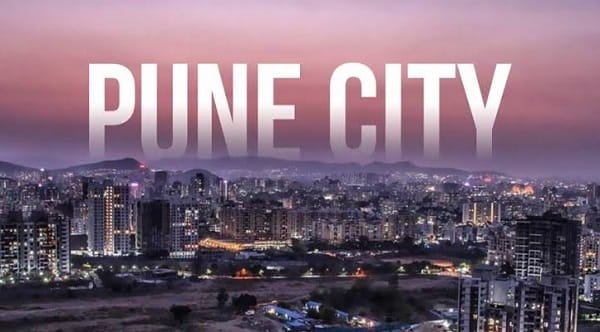
Pune Real Estate Overview 2026
Pune’s real estate market is anchored by India’s third-largest IT employment concentration (after Bengaluru and Hyderabad), a manufacturing and auto sector belt in Pimpri-Chinchwad and Chakan, one of India’s largest student populations driving continuous rental demand, and a retiree and quality-of-life buyer segment drawn to the city’s relatively pleasant climate, cultural richness, and lower congestion compared to Mumbai. Together these four demand drivers create a market with unusual stability across economic cycles — when one segment moderates, others typically sustain overall absorption.
Pune’s geography divides into four principal zones with distinct price characteristics. West Pune — Hinjewadi, Wakad, Baner, Balewadi, Kothrud — is the IT-corridor premium zone. East Pune — Kharadi, Viman Nagar, Wagholi, Keshavnagar — combines airport proximity with IT park access. South Pune — NIBM Road, Kondhwa, Undri, Narhe — is the family residential zone with established social infrastructure. North/PCMC — Pimpri, Chinchwad, Moshi, Charholi, Ravet, Kiwale — is the affordable township zone driven by manufacturing employment and metro-linked appreciation.
Current Market Status: Price Levels Across Pune
Premium West Pune — Baner, Aundh, Balewadi, Kothrud — commands ₹12,000 to ₹22,000 per square foot for quality residential projects. Baner’s average time-on-market for resale 2 BHK fell to 45 to 60 days in 2026 from 75 to 90 days in 2024 — indicating rapid absorption in a market with tight premium inventory. Koregaon Park and Kalyani Nagar in East Central Pune match these price levels. Hinjewadi, Wakad, and Kharadi — the mid-premium IT-corridor addresses — range from ₹7,000 to ₹14,000 per square foot, making them the most transactionally active price segment in the city.
The Hinjewadi belt specifically is showing the strongest quarterly momentum in the April 2026 market update: 2.5 to 3.5% price growth over the quarter — the highest near-term momentum in Pune. Established developers including VTP, Kolte-Patil, Goel Ganga, and Sobha are setting new price floors with premium launches in the ₹1.1 crore to ₹1.8 crore 3 BHK bracket.
East Pune — Kharadi, Viman Nagar, Hadapsar — has delivered 2 to 3% quarterly price growth with strong IT professional buyer absorption. Kharadi’s mature IT hub character — established tech parks, social infrastructure, and multi-developer supply — creates a liquid market where buyers can find inventory at multiple price points. The ₹60 lakh to ₹1 crore bracket now accounts for 42% of PMC-area registrations — a significant upward shift from 36% in Q1 2025, reflecting both rising prices and demand upgrading.
Affordable Emerging Zones — Wagholi, Moshi, Ravet, Kiwale, Bhugaon, Charholi — are the Ring Road and metro extension beneficiaries. These micro-markets have been the largest beneficiaries of new infrastructure delivery, and entry prices remain meaningfully below the city average. Wagholi and Hadapsar serve the first-time buyer at below ₹6,000 per square foot. Ravet and Kiwale in the PCMC belt offer similar pricing with improving connectivity through the Mumbai-Bengaluru bypass and progressive metro extension.
South Pune — NIBM Road, Kondhwa, Undri — has built its reputation on complete neighbourhood character: reputed schools, hospitals, parks, and the kind of social infrastructure that buyers who intend to actually live in their homes prioritise over pure price appreciation. Prices have moved in line with the city average and demand remains reliable. Affordable peripheral areas in Narhe and Ambegaon Pathar start from ₹5,000 per square foot.
The Infrastructure Story That Defines 2026
Pune’s most significant infrastructure development is the Metro network’s progressive delivery. Metro Line 1 (Pimpri-Chinchwad to Swargate) operational since 2023 has already created measurable appreciation in its influence zones. Metro Line 3 (Hinjewadi Phase 3 to Shivajinagar) — targeted around 2026 delivery — is the most consequential project for Hinjewadi’s residential market, which has historically been the city’s strongest employment anchor but has suffered from terrible traffic congestion that deterred buyers from purchasing rather than renting near the IT park.
Properties within approximately 500 metres of metro station locations in Pune have demonstrated 15 to 20% appreciation over two years compared to 8 to 10% for comparable properties at greater distances — a statistically measurable metro premium that is consistent across multiple station locations.
Metro Lines 4 and 4A — approved to connect Kharadi, Hadapsar, Swargate, Khadakwasla, and Warje — will tie east and west into a single transit grid, adding 31.6 km of new route. Areas along Solapur Road and Sinhagad Road are expected to receive 10 to 15% appreciation uplift over the project lifecycle.
The Pune Ring Road (PRR) — a proposed 170 km expressway — is described by multiple analysts as the single largest infrastructure project impacting Pune’s long-term development geography. While full delivery is phased over multiple years, the Ring Road will reshape which areas become viable for new residential development and unlock appreciation in currently peripheral zones.
Hinjewadi IT park — Asia’s largest with over 1,100 companies employing more than 400,000 professionals — continues to expand, with Hinjewadi Phase 3 development adding additional employment that creates direct residential demand in adjacent micro-markets.
Rental Market Performance
Pune offers residential rental yields of 3 to 5% annually — better than Mumbai’s 2.5% average and comparable to Bengaluru’s IT corridor yields. Commercial properties in Baner and Kharadi achieve 7 to 9%. The ₹22,000 to ₹28,000 per month rental for 2 BHK apartments in Hinjewadi Phase 3 reflects the chronic undersupply of quality rental inventory near the city’s largest employment cluster. Rents rose approximately 7 to 9% in early 2025 and a similar trajectory is expected through 2026 as more staff return to office full-time.
Water scarcity — a genuine practical risk in parts of East Pune including Kharadi, Keshavnagar, and Wagholi — is an important due-diligence item for buyers in these zones. Properties in areas dependent on tanker water supply face ongoing operational costs and tenant satisfaction challenges that affect rental demand and resale values. Buyers should specifically verify water supply arrangements before committing in affected Eastern Pune localities.
Forecast: 2026 to 2028
Pune’s residential property prices are expected to rise 6 to 9% in 2026, with infrastructure-linked zones achieving 8 to 12% annually as metro delivery catalyses appreciation in their influence areas. The Ring Road belt’s emerging micro-markets offer the highest appreciation potential over a seven to ten year horizon as they transition from peripheral to mainstream. West Pune’s capital appreciation should compound 8 to 12% annually as Hinjewadi Metro Line 3 delivery approaches and confirms. Pune is not in speculative territory — end-user demand is genuine, RERA compliance is consistently enforced, and developer quality has matured significantly from the 2010s when delay and non-delivery were common.
Areas to Watch in Pune 2026
Hinjewadi Phase 2 and 3 for Metro Line 3 appreciation catalyst before delivery. Wakad and Tathawade for IT-corridor access at below-Baner entry pricing. Kharadi for established east Pune IT hub with strong rental demand. Ravet and Kiwale in PCMC for affordable township investment with metro extension exposure. Bhugaon and Wagholi for Ring Road-linked long-horizon appreciation from an affordable base.
FAQs
Q: What are the average property rates in Pune in 2026?
A: Property rates in Pune range from ₹5,000 to ₹6,000 per square foot in affordable areas like Wagholi, Moshi, and Narhe to ₹7,000 to ₹14,000 per square foot in IT corridor zones like Hinjewadi, Wakad, and Kharadi, to ₹12,000 to ₹22,000 per square foot in premium addresses like Baner, Aundh, Koregaon Park, and Kalyani Nagar.
Q: How is the Pune Metro affecting property prices?
A: Properties within approximately 500 metres of operational or announced metro station locations have seen 15 to 20% appreciation over two years versus 8 to 10% for comparable non-metro properties. Metro Line 3 connecting Hinjewadi to Shivajinagar — expected around 2026 — will be the most significant single catalyst, reducing commute times from two hours to approximately forty minutes and triggering a major re-rating of Hinjewadi’s residential market.
Q: Which are the best areas to invest in Pune in 2026?
A: For rental yield: Kharadi and Hinjewadi. For capital appreciation: Ring Road belt (Bhugaon, Kiwale, Wagholi). For the combination of yield, appreciation, and liquidity: the Golden Triangle pocket of Pimple Nilakh. For premium end-user buying: Baner, Balewadi, and Kharadi.
Q: What is driving demand in Pune’s mid-segment property market?
A: The ₹60 lakh to ₹1 crore bracket now accounts for 42% of PMC-area registrations in 2026. Mid-segment demand is driven by IT professionals upgrading from smaller configurations, first-time buyers entering the market with stabilised home loan rates near 7%, and the demand for larger floor plates post-COVID work-from-home normalisation, which has shifted preferences toward 3 BHK over 2 BHK configurations across buyer categories.
Q: Is water scarcity a risk for Pune property buyers?
A: Yes, specifically in parts of East Pune including Kharadi, Keshavnagar, and Wagholi, where some societies depend on expensive tanker water supply. Buyers should verify water supply arrangements — PCMC versus PMC supply zones have different infrastructure quality — before committing to any property in Eastern Pune localities. Societies with reliable municipal supply or adequate on-site water storage command premium rental rates and better tenant retention than those dependent on tankers.