Top 10 Ice Cream Parlour Chains in India 2026 include Baskin-Robbins, which dominates India’s organised parlour segment with over 700-725 outlets nationwide, running on a genuinely lucrative franchise model where operators keep up to 95 percent of revenue while the franchisor takes just 5 percent. India’s ice cream industry is projected to be part of a $121 billion global market, and while Amul continues dominating the broader retail and grocery channel with roughly 32 percent overall market share, the dedicated parlour experience — where customers walk in specifically for scoops, sundaes, and premium indulgence — belongs to a genuinely distinct set of specialised chains. This list covers the top 10 ice cream parlour chains in India in 2026.
| Rank | Chain | Founded | Positioning |
| 1 | Amul Ice Cream Parlour | 1996 (ice cream division) | Mass-market, no-royalty model |
| 2 | Baskin-Robbins | 1945 (India: 1993) | Super-premium, 700+ parlours |
| 3 | Naturals Ice Cream | — | Premium, fresh-fruit positioning |
| 4 | Havmor | 1944 | Mass-premium, heritage flavours |
| 5 | Giani’s | — | Legacy kulfi-falooda specialist |
| 6 | Cream Stone | — | Indulgent mix-in concept |
| 7 | Arun Ice Creams | — | South India regional heritage |
| 8 | Vadilal | 1907 | Traditional Indian flavours |
| 9 | Gelato Vinto | — | Italian gelato specialist |
| 10 | Chennai Kulfi | — | Traditional kulfi specialist |
1. Amul Ice Cream Parlour
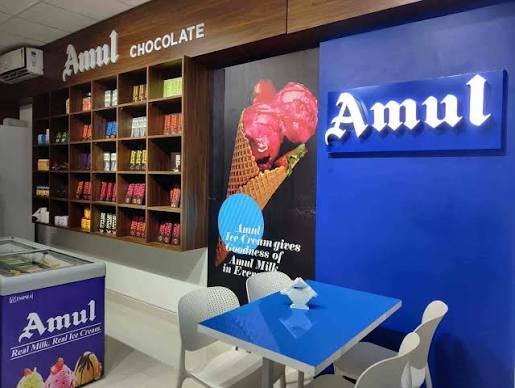
Amul’s parlour model has become genuinely popular among first-time franchise entrepreneurs, built on a distinctive zero-royalty, high-margin commission structure.
- Franchisees keep up to 50 percent margin on recipe-based items, with zero royalty fees and strong cooperative supply backing
- Backed by GCMMF’s extraordinary distribution network reaching villages multinational brands cannot cost-effectively serve
- Requires genuinely low capital investment, making it ideal for small towns and transit hub locations
- Gross margins typically run 20-30 percent, with net margins between 10-20 percent given competitively priced products
2. Baskin-Robbins
Baskin-Robbins, operated in India through Graviss Foods as master franchisee, dominates the country’s organised super-premium parlour segment.
- Operates over 700-725 organised parlours across India, the largest network in the premium parlour segment
- Founded globally in 1945, entering India in 1993, promoting its iconic 31 flavours concept
- Delivers gross margins of 45-55 percent, with net margins between 18-30 percent depending on location quality
- Positioned at the top of India’s premium ice cream hierarchy, competing directly with Häagen-Dazs for aspirational, experience-seeking consumers
3. Naturals Ice Cream
Naturals has built India’s strongest homegrown premium ice cream brand, renowned specifically for its fresh, natural fruit-based positioning.
- Current annual revenue estimated between ₹150-200 crore
- Delivers gross profit margins around 55 percent, among the highest in the parlour segment
- Known for the strongest quality control standards, offering pure, natural ice cream rather than heavily processed alternatives
- Provides extensive franchisee support including store selection, layout planning, and staff training
4. Havmor
Havmor, founded in Ahmedabad in 1944 by Satish Chona, has grown from a regional Gujarat favourite into a genuinely national premium brand following its 2017 acquisition by Korea’s Lotte Confectionery.
- Operates over 200 outlets nationally, with projected annual revenue between ₹600-1,000 crore
- Known for rich, creamy heritage recipes including its famous Kesar Pista and Triple Sundae varieties
- Delivers profit margins between 18-25 percent depending on location and sales performance
- Continues expanding operations beyond its original Gujarat base with Korean investment backing
5. Giani’s
Giani’s holds genuine legacy status within Delhi’s ice cream parlour culture, specialising specifically in kulfi and falooda rather than conventional Western-style ice cream.
- Positioned as a legacy kulfi-falooda specialist, distinct from the scoop-focused chains dominating the rest of this list
- Maintains strong brand recognition particularly within North India’s traditional dessert culture
- Represents one of the clearest examples of an Indian heritage dessert brand competing successfully against international parlour chains
- Continues to be regularly cited among India’s top ice cream and dessert franchise recommendations
6. Cream Stone
Cream Stone has built a genuinely distinctive position around its interactive, customisable mix-in ice cream concept, appealing to younger, experience-seeking customers.
- Known specifically for its “mix and match” indulgent ice cream preparation style
- Appeals to a distinctly younger demographic seeking an interactive dessert experience rather than a simple scoop purchase
- Competes directly with Baskin-Robbins and Naturals for India’s premium parlour customer base
- Represents the experiential dessert segment within India’s broader ice cream parlour landscape
7. Arun Ice Creams
Arun Ice Creams has built a dominant regional heritage brand specifically across South India, particularly strong in Chennai and Tamil Nadu.
- Represents South India’s most significant regional ice cream heritage brand
- Offers traditional flavours and tub formats alongside its parlour-based retail presence
- Franchise revenue-sharing model typically gives franchisees 95 percent, with breakeven achieved within roughly 18 months
- Continues to be a dominant name specifically within Tamil Nadu’s ice cream parlour market
8. Vadilal
Vadilal, founded in 1907, carries genuine century-plus heritage as one of India’s oldest ice cream manufacturers, now extending its retail presence through dedicated parlour outlets.
- One of India’s longest-established ice cream brands, with deep roots in traditional Indian flavour development
- Regularly cited among India’s top six ice cream companies by overall market presence
- Competes across both retail grocery channels and dedicated parlour formats
- Represents the traditional, heritage segment of India’s broader ice cream parlour and retail landscape
9. Gelato Vinto
Gelato Vinto has carved out a specific niche bringing authentic Italian gelato-style ice cream into India’s premium dessert parlour segment.
- Specialises specifically in Italian gelato, distinct from the American-style scoop parlours dominating this list
- Regularly cited among India’s most profitable premium ice cream franchise opportunities
- Appeals to consumers specifically seeking an internationally authentic dessert experience
- Represents the growing diversification within India’s premium ice cream parlour segment beyond traditional scoop formats
10. Chennai Kulfi
Chennai Kulfi rounds out this list as a dedicated traditional kulfi specialist, representing the continued relevance of India’s indigenous frozen dessert heritage within the modern parlour landscape.
- Specialises specifically in traditional Indian kulfi rather than Western-style ice cream
- Regularly cited among India’s top profitable ice cream and dessert franchise opportunities
- Represents the continued strong demand for authentic, traditional Indian frozen dessert formats
- Competes for a genuinely distinct customer segment compared to the international-style parlour chains elsewhere on this list
Frequently Asked Questions
Q1. Which ice cream parlour chain has the largest organised network in India?
Baskin-Robbins holds that position with over 700-725 organised parlours nationwide, dominating India’s premium scoop-parlour segment through its master franchisee, Graviss Foods.
Q2. Is Amul’s ice cream parlour franchise genuinely more profitable than premium brands like Naturals or Baskin-Robbins?
Not necessarily in margin terms — Amul’s zero-royalty model offers accessible entry and reasonable margins, but premium brands like Naturals and Baskin-Robbins typically deliver higher gross margins of 45-55 percent given their premium pricing.
Q3. What’s the difference between a mass-market ice cream brand like Amul and a parlour chain like Baskin-Robbins?
Amul primarily competes through grocery and retail distribution channels at affordable pricing, while Baskin-Robbins operates dedicated experiential parlours specifically positioned around premium, occasion-based indulgence.
Q4. Which ice cream franchise is best suited for small towns versus metro cities?
Amul’s low-capital, high-footfall model works particularly well in small towns and transit hubs, while premium chains like Naturals, Baskin-Robbins, and Cream Stone perform best in metro and Tier 1 city locations.