The e-rickshaw business has emerged as one of India’s most accessible, most socially impactful, and most commercially relevant electric vehicle entrepreneurship opportunities — providing last-mile urban and peri-urban transportation across thousands of Indian cities and towns where the combination of traffic congestion, short-distance commuting needs, and the high cost of conventional auto-rickshaws creates strong demand for affordable electric alternatives. India has over 15 lakh registered e-rickshaws — a number growing rapidly — and the central and state government policy support for this zero-emission vehicle category makes the regulatory environment consistently favourable.
From owner-operator single vehicle models to small fleet ownership and franchise operations, the e-rickshaw business offers genuine commercial opportunity for entrepreneurs at every capital level.
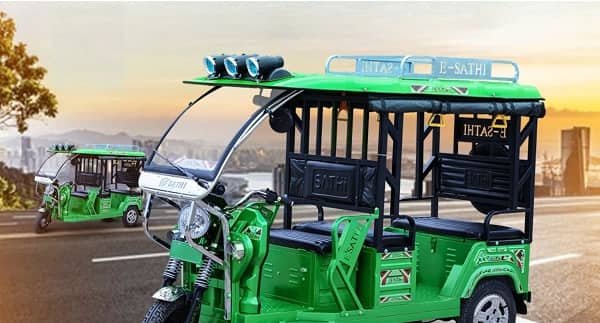
Advantages of E-Rickshaw Business
1. Very Low Operating Cost Compared to Conventional Alternatives
The e-rickshaw’s most powerful commercial advantage is its dramatically lower operating cost compared to petrol or CNG-powered three-wheelers. Electricity consumption of ₹30–50 per full charge delivering 80–100 kilometres of range creates per-kilometre fuel costs of approximately ₹0.30–0.50 — compared to ₹2.50–4.00 per kilometre for CNG auto-rickshaws. This 5–8x fuel cost advantage translates directly into either higher profitability for the operator at equivalent fare levels or the ability to offer lower fares while maintaining better margins than fossil-fuel competitors — a powerful dual advantage that drives both operator preference and customer adoption.
2. Low Purchase Cost and Government Subsidy Support
E-rickshaws are among India’s most affordable commercial vehicles — a new e-rickshaw costs ₹1–1.5 lakhs, with government-subsidised models available under various state schemes at even lower effective costs. FAME-II subsidies, state-level electric vehicle purchase incentives, and MUDRA loans specifically designed for e-rickshaw operators collectively reduce the effective capital requirement to ₹30,000–60,000 equity for an owner-operator — creating an ownership model accessible to economically marginalised populations who would be excluded from conventional vehicle business ownership. This accessibility makes the e-rickshaw one of India’s most genuinely inclusive entrepreneurship opportunities.
3. High Demand in Urban Last-Mile Connectivity
E-rickshaws fill a specific and heavily demanded urban transportation niche — the 1–5 kilometre last-mile connection between metro stations, bus stands, and railway stations and residential areas that is too short for auto-rickshaws to serve economically but too long for comfortable walking. This niche is structurally valuable in India’s rapidly urbanising landscape — as cities grow and public transit systems expand, the last-mile connectivity gap that e-rickshaws fill becomes larger and more commercially important. Routes near metro stations, railway stations, and large residential clusters generate consistent daily demand with multiple trip rotations that accumulate substantial daily revenue.
4. Simple Operation and Low Maintenance Requirements
E-rickshaws have significantly fewer moving parts than internal combustion vehicles — no engine oil changes, no carburetor maintenance, no exhaust system servicing, and no transmission complications. Maintenance requirements are primarily limited to tyre replacement, brake adjustment, battery care, and occasional electrical system servicing — creating maintenance costs that are dramatically lower than petrol or diesel vehicle alternatives. This simplicity makes e-rickshaws operable by drivers without advanced mechanical knowledge and maintainable through a growing network of local e-rickshaw service centres without expensive authorised dealership dependence.
5. Environmental Positioning and Policy Tailwind
E-rickshaws benefit from one of the most consistently supportive policy environments of any commercial vehicle category — the government’s clean energy transportation agenda creates regulatory preferences including preferential permit allocation, exemption from certain permit restrictions, and priority lanes in some city traffic management schemes. This policy tailwind reduces regulatory friction in a commercial vehicle category that is otherwise heavily regulated. The zero-emission positioning also resonates with institutional customers — corporate campuses, educational institutions, and housing complexes that prefer eco-friendly transportation solutions for their residents and employees.
Disadvantages of E-Rickshaw Business
1. Battery Life and Replacement Cost
The e-rickshaw’s most significant operational financial challenge is battery degradation and replacement. Lead-acid batteries — used in most affordable e-rickshaws — lose capacity progressively with charge cycles, requiring replacement every 12–18 months at ₹12,000–20,000. This recurring replacement cost substantially affects the business economics if not adequately planned for — operators who do not budget for battery replacement frequently face operational disruption when batteries fail. Lithium-ion battery e-rickshaws have significantly longer battery life but cost ₹2.5–4 lakhs — substantially higher than lead-acid models — requiring more capital for superior long-term economics.
2. Limited Range and Daily Revenue Ceiling
A fully charged e-rickshaw covers 80–100 kilometres before requiring recharging — a limitation that creates a daily revenue ceiling based on the distance achievable in a working day. A standard 6–8 hour working shift covering multiple routes generates ₹600–1,200 in gross fares — from which fuel equivalent, maintenance provisions, and loan EMI must be deducted. The daily revenue ceiling limits the income potential of owner-operators to levels that, while better than employment alternatives for the target demographic, are not transformatively high. Fleet operators who own multiple vehicles can multiply income but must manage the proportional increase in maintenance, driver management, and capital obligations.
3. Unorganised Market and Regulatory Uncertainty
The e-rickshaw sector operates in a regulatory environment that varies significantly by state and city — permit requirements, route restrictions, speed limits, and vehicle standards are inconsistently implemented and frequently changed. Several states have imposed periodic restrictions on e-rickshaw operations in specific areas — creating operational uncertainty that affects income planning. The highly fragmented, unorganised nature of the e-rickshaw market creates both pricing pressure and service quality inconsistency that undermines the sector’s commercial development and makes premium positioning difficult to sustain.
4. Charging Infrastructure Limitations
Despite the low per-charge electricity cost, accessing charging infrastructure is an ongoing operational challenge — particularly for drivers who do not own residential charging facilities. Public charging infrastructure for e-rickshaws remains inadequate in most Indian cities, and dependency on informal charging arrangements from commercial establishments adds variability to charging access, cost, and time. Extended charging time during the working day — a full charge takes 6–8 hours for lead-acid batteries — creates opportunity cost by taking vehicles out of revenue-generating service during the charging window.
5. Competition from App-Based Mobility and Auto-Rickshaws
E-rickshaws face competitive pressure from multiple directions — conventional auto-rickshaws competing on range and all-weather capability, app-based mobility platforms providing convenient alternatives for price-insensitive customers, and the gradual expansion of CNG auto-rickshaws into routes where e-rickshaws have established themselves. As Indian cities develop better public transit, the last-mile connectivity need that e-rickshaws serve may be partially addressed by formal feeder services — reducing the commercial opportunity in specific markets even as aggregate urban e-rickshaw demand grows nationally.
Frequently Asked Questions (FAQs)
Q: Is e-rickshaw business profitable in India?
A: Yes — owner-operators can earn net income of ₹300–600 daily after costs. Fleet operators with multiple vehicles and efficient driver management achieve proportionally higher returns.
Q: How much investment is needed to start an e-rickshaw business in India?
A: A new e-rickshaw costs ₹1–1.5 lakhs. With MUDRA loans and government subsidies, effective equity investment can be as low as ₹30,000–60,000 for an owner-operator.
Q: What licence is required to operate an e-rickshaw in India?
A: E-rickshaw permit from the state transport authority, commercial driving licence, vehicle registration, and third-party insurance are the primary requirements.
Q: How long do e-rickshaw batteries last?
A: Lead-acid batteries typically last 12–18 months requiring ₹12,000–20,000 replacement. Lithium-ion batteries last 5–7 years at higher initial cost but better long-term economics.
Q: Is e-rickshaw fleet business better than owner-operator model?
A: Fleet ownership multiplies income potential but requires driver management capability, higher capital, and maintenance infrastructure. Owner-operator is lower-risk for first-time entrepreneurs.