Here’s the thing worth clarifying immediately: USDT isn’t a separate currency competing with the US dollar. It’s a digital token designed to represent one, dollar for dollar. So the real question isn’t “which currency is stronger” — it’s whether holding a blockchain-based token pegged to the dollar makes more sense for you than simply holding actual dollars in a bank account. That’s a genuinely practical question with a genuinely nuanced answer.
What USDT Actually Is, Relative to the Dollar
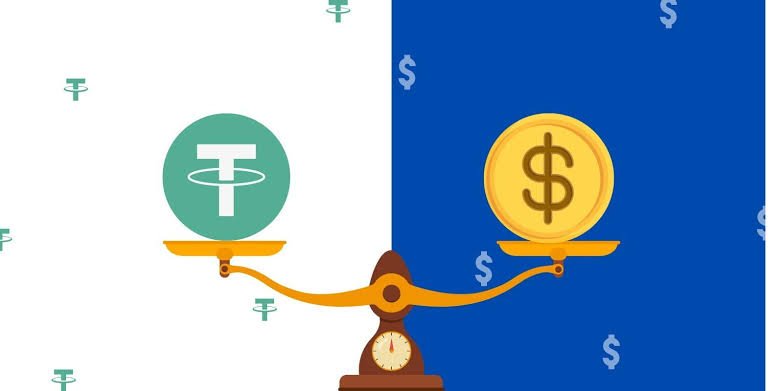
USDT, issued by Tether, is a stablecoin designed to maintain a 1:1 peg with the US dollar. Its reserves are reported to consist heavily of cash and cash equivalents, including US Treasury bills, disclosed periodically by the company. In theory, and generally in practice, one USDT should always be redeemable for roughly one US dollar. It’s not a competing asset trying to outperform the dollar — it’s a digital representation of it, built to move across blockchain networks the way traditional dollars move through banking systems.
The Case for Holding Actual USD
Traditional US dollars, held in a bank account, come with protections that USDT simply doesn’t offer in the same form. Bank deposits are typically insured up to a certain limit by government deposit insurance, providing a genuine safety net if the bank itself fails — a protection with no direct equivalent for USDT holdings. Dollars in a regulated bank account are also fully embedded in the traditional financial and legal system, with established consumer protections, dispute resolution processes, and regulatory oversight that has existed for decades.
For most everyday spending, saving, and long-term security, actual USD in an insured account remains the more conservative, better-protected option.
The Case for Holding USDT Instead
USDT’s advantages show up specifically in situations where speed, accessibility, or cross-border movement matter more than traditional banking protections. Transactions settle in seconds rather than days, regardless of banking hours, weekends, or international borders. In countries experiencing currency instability, limited banking access, or capital controls, USDT often functions as one of the most accessible ways for ordinary people to hold and transact in dollar-equivalent value, even without access to a traditional US bank account.
USDT also integrates directly with crypto exchanges and decentralized finance platforms, letting holders move funds, trade, or access yield-generating opportunities that a traditional bank account simply doesn’t provide access to.
Counterparty Risk: A Real Difference Worth Understanding
Holding actual USD in an insured bank account carries government-backed deposit insurance protection up to a specified limit. Holding USDT carries a different kind of counterparty risk entirely — you’re trusting that Tether’s reserves genuinely back every token in circulation, and that the company can honor redemptions if a large number of holders wanted to cash out simultaneously. Tether has faced historical scrutiny over reserve transparency, though the company has meaningfully improved its reporting and disclosure practices in recent years.
This isn’t a reason to avoid USDT entirely — it’s a reason to understand that “digital dollar” and “bank-insured dollar” carry meaningfully different risk profiles, even when both are pegged to the same value.
Yield and Growth Potential
Sitting in a standard checking account, USD generally earns little to no interest. USDT itself, held simply as a token, also doesn’t generate yield on its own — but it can be deployed into various crypto lending or decentralized finance protocols to earn yield, something a traditional bank account doesn’t offer in the same accessible, borderless way. That said, yield-generating crypto platforms carry their own additional risks — smart contract vulnerabilities, platform insolvency, and the general volatility of the broader crypto ecosystem — that a standard insured savings account simply doesn’t carry.
Inflation Considerations Apply to Both Equally
It’s worth remembering that USDT, being pegged to the dollar, carries the exact same inflation exposure as holding actual USD. If the dollar’s purchasing power erodes over time due to inflation, USDT erodes right along with it — being on a blockchain doesn’t provide any inflation protection. Neither USD nor USDT is designed to be a growth or inflation-hedging asset; both are explicitly designed for stability, not appreciation.
Accessibility and Practical Use Cases
For someone already well-served by the traditional banking system — easy account access, reasonable fees, straightforward transfers — actual USD in a bank account remains the simpler, more protected choice for most everyday financial needs. For someone needing to move money across borders quickly, access dollar-equivalent value without a traditional bank account, or participate in crypto trading and DeFi platforms, USDT fills a genuinely practical gap that traditional banking often can’t address as efficiently.
The Bottom Line
USDT and USD aren’t really rivals — USDT is designed specifically to track the dollar’s value, not outperform or replace it. The actual decision comes down to which risk and protection profile fits your situation: traditional USD offers government-backed deposit insurance and full integration with established financial protections, while USDT offers speed, borderless accessibility, and direct entry into crypto markets, at the cost of different, less traditionally regulated counterparty risk. This isn’t personalized financial advice — a licensed financial advisor can help you weigh these tradeoffs against your specific financial situation and goals.
FAQs
Q1. Is my money safer in a bank account than in USDT, given that both are supposed to represent the same dollar value?
In terms of formal protection, generally yes — bank deposits typically carry government-backed insurance up to a set limit, which USDT holdings don’t have an equivalent to. USDT’s safety instead depends on Tether’s reserve backing and its ability to honor redemptions, which is a fundamentally different kind of protection than deposit insurance.
Q2. Can I lose money holding USDT even though it’s supposed to always equal $1?
In rare circumstances, yes — stablecoins can experience temporary “depegging” events during periods of severe market or banking stress, where their price briefly trades below their intended $1 value before recovering. This has happened to other major stablecoins in the past, which is a reminder that a dollar peg is a design goal, not an absolute guarantee.
Q3. Why would someone choose to hold USDT instead of just keeping US dollars in a bank account?
The main practical advantages are speed, borderless accessibility, and direct integration with crypto trading and decentralized finance platforms, none of which traditional bank accounts offer in the same way. This is especially relevant for people in regions with limited banking access or unstable local currencies, where USDT can function as one of the more accessible ways to hold dollar-equivalent value.
Q4. Does converting my USD into USDT and back cost me anything?
Yes, typically — converting between fiat currency and stablecoins usually involves transaction fees, exchange rate spreads, or network fees depending on the platform and blockchain used. If you’re only holding briefly and converting back and forth frequently, these costs can add up, so it’s worth checking the specific fees on your chosen platform before moving funds repeatedly.