Ethereum’s decentralized finance ecosystem holds tens of billions of dollars in value locked into it. Solana’s network processes trades at a fraction of the cost and speed. Both facts are true simultaneously, and both matter — because Ethereum and Solana aren’t really competing on the same axis. One built for trust and depth; the other built for speed and scale. Deciding between them means deciding which of those priorities matters more to you.
Two Blockchains, Two Different Engineering Philosophies
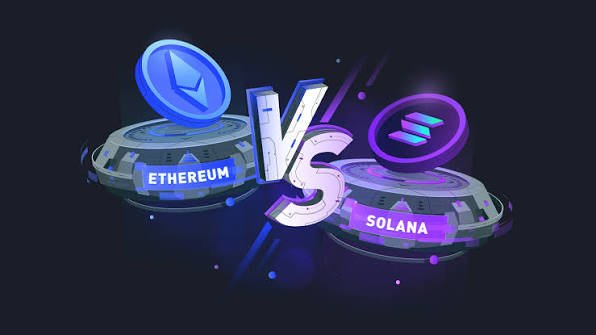
Ethereum, launched in 2015, was the first blockchain built specifically for smart contracts and decentralized applications — and its entire architecture reflects a “security first” mindset. Rather than scaling the main network directly, Ethereum pushes most transaction activity onto Layer-2 networks built on top of it, prioritizing decentralization even at the cost of a somewhat fragmented user experience across different scaling solutions.
Solana, launched in 2020, took the opposite approach — building a single, unified, high-throughput chain designed for raw speed from day one. Rather than scaling horizontally through external layers, Solana scales vertically within its own core architecture, aiming for a simpler, faster experience at the cost of concentrating more risk in one execution environment.
Speed and Cost: Where Solana Clearly Wins
This is Solana’s most tangible advantage. Its network delivers significantly faster transaction finality and dramatically lower fees than Ethereum’s base layer, which has made it the platform of choice for high-frequency retail activity — trading, gaming applications, and consumer-facing products that need near-instant, cheap transactions. Ethereum’s own Layer-2 networks have narrowed this gap considerably, but that comes with the added complexity of navigating a more fragmented ecosystem rather than one unified chain.
Security and Institutional Trust: Where Ethereum Still Leads
Ethereum remains the more established, security-focused platform, holding a considerably larger share of total value locked in decentralized finance and a much larger footprint in stablecoin activity. Its track record of consistent network uptime has made it the preferred choice for institutional finance, real-world asset tokenization projects from major traditional financial firms, and applications where security and proven reliability matter more than raw speed.
Solana, meanwhile, still carries some reputational weight from network outages in its earlier years, though its more recent track record has shown meaningfully improved stability, which has helped it build genuine institutional credibility it lacked previously.
Market Size and What That Means for Growth Potential
Ethereum’s market capitalization is considerably larger than Solana’s — several times the size, depending on when you check. That size gap illustrates where institutional capital has concentrated its confidence in smart-contract infrastructure so far. But it also means Solana, starting from a smaller base, has more room for outsized percentage gains if its adoption continues accelerating, while Ethereum’s larger size makes equivalent percentage moves considerably harder to achieve.
Institutional Momentum Is Shifting, But Ethereum Still Leads Overall
Both networks have seen real institutional interest recently — regulated investment products tracking each asset have drawn serious capital, and major traditional finance players have filed for or launched products tied to both. That said, Ethereum’s institutional footprint remains considerably deeper and more established, even as Solana has closed some of that gap faster than many expected.
Trading Activity Tells a More Complicated Story
Interestingly, the two networks have traded the lead in decentralized exchange trading volume back and forth over recent quarters — Solana capturing the top spot during periods of strong retail enthusiasm, with Ethereum reclaiming dominance when market focus shifts toward larger, more institutional-grade activity. This back-and-forth illustrates something important: Solana currently captures more retail momentum and speculative trading, while Ethereum tends to attract higher-value, more deliberate capital.
Risk Considerations Specific to Each Network
Ethereum’s risk profile centers on its more complex, modular scaling approach — spreading liquidity and activity across multiple Layer-2 networks creates genuine fragmentation, which can complicate the user experience and dilute value capture at the base layer over time. Solana’s risk profile centers on its unified architecture — while this makes for a simpler experience, it also concentrates operational risk in a single execution environment rather than distributing it across independent scaling layers.
Both assets remain considerably more volatile than traditional investments, and both are exposed to genuine competitive risk from newer blockchain platforms trying to capture the same activity and developer attention.
So Which One Is Actually Better?
Neither network is universally superior — they’re built for different jobs. Ethereum suits investors prioritizing established security, deep institutional adoption, and exposure to high-value financial infrastructure use cases. Solana suits investors seeking higher growth potential from a smaller market cap base, betting on continued retail and consumer application adoption alongside emerging institutional interest. Many crypto investors choose to hold both, treating Ethereum as the more established core holding and Solana as a higher-beta satellite position.
The Bottom Line
Ethereum and Solana represent two legitimately different bets on how the decentralized internet develops — one prioritizing proven security and institutional depth, the other prioritizing speed and retail-driven growth from a smaller starting point. Both carry substantial volatility and real technological and competitive risk. This isn’t personalized financial advice — cryptocurrency investing carries genuine risk of significant loss, and a licensed financial advisor can help you think through whether either asset, or both, fit your specific risk tolerance and goals.
FAQs
Q1. Is Solana a good alternative to Ethereum for someone who found Ethereum’s transaction fees too expensive?
Yes, in terms of cost and speed specifically — Solana’s base layer offers considerably lower fees and faster transactions than Ethereum’s main chain. That said, Ethereum’s Layer-2 networks have narrowed much of that cost gap in recent years, so it’s worth comparing Solana directly against a specific Ethereum L2 rather than against Ethereum’s base layer alone before deciding.
Q2. Does Solana’s history of network outages mean it’s still less reliable than Ethereum today?
Solana’s more recent track record has shown meaningfully improved network stability compared to its earlier years, though Ethereum still holds a longer, more consistent uptime history overall. If reliability and proven track record are your top priority, that history still favors Ethereum, but it’s worth checking Solana’s recent uptime data directly rather than relying solely on its earlier reputation.
Q3. Should I invest in both Ethereum and Solana, or pick just one?
Many investors do hold both, treating Ethereum as a more established, lower-volatility core position and Solana as a smaller, higher-growth-potential satellite holding. The right split depends on your personal risk tolerance — if you prefer more stability, weighting toward Ethereum makes sense; if you’re comfortable with more volatility for higher potential upside, a larger Solana allocation might suit you better.
Q4. How much of my crypto portfolio should be in higher-risk assets like Solana versus more established ones like Ethereum?
There’s no universal answer, since it depends on your overall risk tolerance and how much volatility you can handle without wanting to sell during a downturn. A common approach is weighting more heavily toward the more established asset and treating smaller, higher-growth-potential coins as a limited portion of the overall crypto allocation — but this is worth discussing with a financial advisor familiar with your full financial picture.