Digital marketing was supposed to have killed print by now — yet businesses continue printing brochures, packaging, direct mail, and promotional materials at genuine scale, and a printing press business remains a viable, often profitable operation for owners who understand where the real opportunities sit. The industry hasn’t collapsed; it’s transformed, and success increasingly depends on knowing which parts of that transformation to embrace.
The Advantages
Genuinely Durable, Trusted Demand
Print remains one of the most trusted forms of communication, and audiences consistently engage with physical printed materials — newspapers, brochures, direct mail — differently than they do digital ads, which are easily scrolled past or ignored. This trust factor gives printed materials a genuine, ongoing role in marketing and business communication that digital advertising alone hasn’t fully replaced, despite years of predictions to the contrary.
Reaching Local Audiences Effectively
Print is particularly well-suited for reaching local customers, since businesses can hand out materials directly in public areas, place ads in local newspapers, and use direct mail to target specific neighborhoods with genuine precision. For businesses focused on a local or regional customer base rather than a global one, print offers a genuinely effective channel that digital advertising sometimes struggles to replicate at the same level of local trust and relevance.
Digital Printing Has Lowered the Barrier to Entry
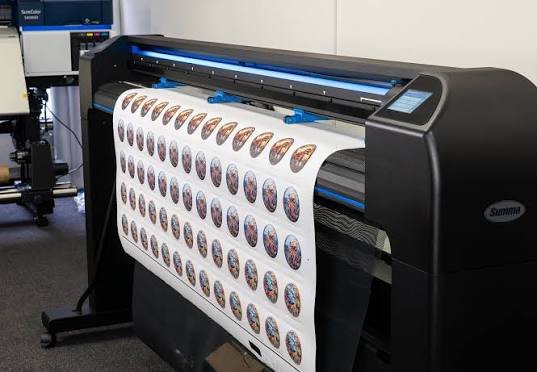
Unlike traditional offset printing, which requires expensive plate setup and preparation, digital printing eliminates those steps entirely, making it considerably more economical for smaller print runs. This shift has opened the door for smaller printing businesses to serve clients who need limited quantities without requiring the same capital investment or minimum order volumes that offset printing historically demanded.
Fast Turnaround Times Create Real Competitive Advantage
Digital printing presses can begin producing almost immediately after receiving a digital file, dramatically reducing production time compared to traditional setup-heavy processes. This speed lets a printing business respond quickly to client demands, last-minute marketing needs, or urgent reprint requests — a genuine differentiator against slower, more traditional production processes.
AI and Automation Are Creating Real Efficiency Gains
Artificial intelligence is increasingly automating time-consuming tasks within print and promotional businesses, freeing staff to focus on higher-value client work rather than repetitive processes. Notably, a substantial share of print and promo firms still haven’t adopted AI tools in their operations, meaning businesses that move early on this front can build a genuine competitive advantage over slower-moving competitors.
Print-On-Demand Offers a Genuinely Low-Risk Entry Model
For newer or smaller printing operations, print-on-demand models let a business produce items only as orders come in, eliminating the need to hold large, costly inventory upfront. This considerably reduces financial risk for new entrants and allows genuine creative differentiation — offering custom, self-designed products rather than competing on identical, mass-produced items against every other seller in a crowded market.
The Disadvantages
Real Environmental Impact and Sustainability Pressure
Printing operations consume significant paper and ink, contributing to deforestation, pollution, and waste disposal concerns that increasingly matter to environmentally conscious clients and regulators alike. Businesses that don’t address sustainability — through recycled materials, efficient production processes, or waste reduction — risk losing clients who specifically need to demonstrate their own environmental responsibility through their supply chain choices.
Global Reach Remains Genuinely Limited
Unlike digital marketing, which can reach audiences anywhere instantly, print materials are inherently constrained by physical distribution — very few print publications or materials reach a truly global audience. Printing businesses focused on clients wanting broad, international marketing reach face a genuine structural limitation that digital channels simply don’t share.
Digital Printing Carries Real Size and Format Constraints
Digital printing presses typically come with paper size limitations, restricting the maximum printable area compared to the larger format capabilities that traditional offset presses offer. This constraint can genuinely limit design possibilities for certain projects, meaning a printing business relying purely on digital equipment may need to turn away or subcontract larger-format jobs.
Economic Cyclicality Requires Active Management
The print industry experiences genuine ebbs and flows tied to broader economic conditions, and simply riding out these cycles passively isn’t sufficient in the current environment — economic pressure increasingly requires active adjustment through expanding into new markets, adding new product offerings, and pursuing existing customer growth deliberately rather than assuming demand will simply return on its own.
Facing Structural, Not Just Cyclical, Industry Shifts
Beyond normal economic ups and downs, the print industry faces genuine paradigm shifts — the continued adoption of print-on-demand alongside e-commerce, and increasingly rapid client expectations around turnaround speed. Businesses that treat these shifts as temporary disruptions rather than permanent changes to how the industry operates risk falling behind competitors who adapt their entire business model rather than just weathering a rough patch.
Competition From Digital Alternatives for Certain Use Cases
While print retains genuine advantages for specific applications, digital marketing channels continue capturing budget and attention for use cases where speed, real-time analytics, and easy content updates matter more than physical presence. Printing businesses need to clearly identify and lean into the specific scenarios where print genuinely outperforms digital, rather than trying to compete head-to-head across every marketing use case.
Weighing It All Together
A printing press business rewards owners who actively adopt available technology — AI-driven efficiency tools, digital printing flexibility, print-on-demand models — rather than relying on traditional processes and hoping demand simply returns to previous levels. Success increasingly depends on identifying genuinely durable use cases where print outperforms digital, addressing sustainability concerns proactively, and treating structural industry shifts as permanent changes requiring real strategic adaptation.
The Bottom Line
Printing press businesses benefit from genuinely trusted, locally effective demand and real opportunities created by digital printing’s lower barriers and print-on-demand’s reduced risk model, but they face real environmental scrutiny, structural competition from digital channels, and genuine format and reach limitations. Owners who actively embrace efficiency-boosting technology and clearly differentiate their offering around print’s specific strengths tend to build the most resilient businesses in an industry that’s transforming rather than disappearing.
FAQs
Q1. Should a new printing business invest in digital printing equipment, traditional offset presses, or both?
Digital printing offers considerably lower barriers to entry and faster turnaround for smaller print runs, making it a practical starting point for newer or smaller businesses without large capital reserves. Offset printing remains valuable for larger-format projects or high-volume runs where its cost-per-unit advantages outweigh digital’s flexibility, so many established printing businesses eventually offer both to serve a wider range of client needs.
Q2. How can a printing business address growing client concerns about environmental impact?
Offering recycled or sustainably sourced paper options, minimizing waste through more precise production planning, and being transparent with clients about your environmental practices can help address this genuine and growing concern. Positioning these efforts clearly in your marketing also helps attract environmentally conscious clients who specifically need to demonstrate sustainable sourcing through their own supply chain.
Q3. Is it worth adopting AI tools in a printing business, given that many competitors still haven’t?
Yes, generally — since a significant share of print and promo firms haven’t yet adopted AI tools, businesses that move early can build a genuine efficiency and competitive advantage before it becomes standard practice across the industry. Starting with automating repetitive administrative or production tasks, rather than attempting a complete operational overhaul at once, tends to be a more manageable way to begin capturing these gains.
Q4. How does a printing business compete against digital marketing channels that clients are increasingly favoring?
Rather than trying to compete directly across every use case, focusing on scenarios where print genuinely outperforms digital — local community engagement, tangible brand materials, and audiences who respond more to trusted physical communication — tends to be a more effective strategy. Clearly communicating this specific value proposition to clients, rather than positioning print as a generic alternative to digital, helps justify continued print investment in a marketing budget increasingly weighted toward digital channels.