Most borrowers read their loan sanction letter the way they read terms and conditions — quickly, selectively, and with more attention to the loan amount and EMI than anything else. The sanction letter is signed, submitted, and filed. The loan is disbursed. And the details that were glossed over begin to matter only when they cause a problem months or years later.
A loan sanction letter is not a formality. It is the primary contractual document that defines every material term of your borrowing relationship with the lender. Reading it properly — understanding every clause, questioning anything unclear, and identifying terms that require negotiation before acceptance — is one of the most financially protective actions a borrower can take.
What a Sanction Letter Actually Is
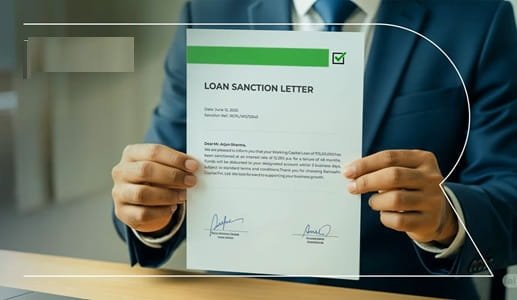
A loan sanction letter is a formal communication from the lender confirming their approval to extend credit to you on specific terms. It is not the loan agreement — that is a separate, more detailed document executed at disbursement. But the sanction letter sets the parameters within which the loan agreement is drawn up, and accepting the sanction letter is typically treated as the borrower’s agreement to the outlined terms.
It is issued after credit assessment is complete and before disbursement, and it carries a validity period — typically 30 to 60 days — within which the borrower must accept and complete the process.
The Key Sections to Scrutinise
Sanctioned Amount vs. Disbursed Amount The sanction letter will state the approved loan amount. Check whether this matches what was applied for, and note that the actual disbursed amount may be net of processing fees deducted at source. If the letter says ₹10 lakh is sanctioned but processing fees of ₹15,000 are deducted upfront, your account receives ₹9.85 lakh while your EMIs are calculated on ₹10 lakh. This affects the effective interest rate you’re actually paying.
Rate of Interest — Fixed or Floating This is one of the most consequential terms in the document. A fixed rate remains constant for the loan tenure. A floating rate is linked to an external benchmark — typically the RBI’s repo rate through the Repo Linked Lending Rate system — and can change when the benchmark changes.
For home loans and LAP, floating rates are standard. For personal loans and vehicle loans, fixed rates are more common. Understand which type applies to your loan and what the reset mechanism is if floating — how frequently can it change, and what notice will you receive?
Loan Tenure Verify the tenure matches your application and your financial plan. A longer tenure reduces EMI but increases total interest outgo significantly. A shorter tenure does the opposite. Check whether the tenure can be modified at disbursement if you’ve changed your preference.
Processing Fee and Other Upfront Charges The sanction letter should itemise all charges due at disbursement — processing fee, legal fee, technical valuation fee for property loans, stamp duty on the loan agreement, insurance premium if applicable. Add all of these up and calculate the effective upfront cost. Processing fees on home loans and LAP can reach 0.5% to 1% of the loan amount — on a ₹50 lakh loan, that is ₹25,000 to ₹50,000 before you’ve paid a single EMI.
Prepayment and Foreclosure Terms This clause determines your freedom to repay early and at what cost. For floating rate loans extended to individuals, RBI guidelines prohibit prepayment penalties. For fixed rate loans, lenders can legitimately charge foreclosure fees — typically 2% to 5% of the outstanding principal — after an initial lock-in period.
If you have any likelihood of receiving a lump sum during the loan tenure — a bonus, a property sale, an inheritance — understanding prepayment terms before accepting the sanction is essential.
Equitable Mortgage and Charge Creation For secured loans — home loans, LAP, vehicle loans — the sanction letter will describe the security arrangement. For property loans, this involves creation of an equitable mortgage through deposit of original title deeds. Understand what documents you are depositing, confirm the lender has a clear process for returning them at loan closure, and ensure this is documented.
Conditions Precedent to Disbursement This section lists what must happen before the loan is released. For property loans, this may include property insurance, title verification completion, technical valuation, and legal clearance. For business loans, it may include submission of financial statements or registration documents. Read these conditions carefully — failure to meet any one of them delays disbursement and can affect time-sensitive purchases.
Terms You Should Negotiate Before Accepting
The sanction letter marks the moment of maximum negotiating leverage for the borrower. Once you’ve accepted the terms and the loan is disbursed, renegotiating is substantially harder.
Processing fees are negotiable at most lenders — particularly for existing customers with good relationships or for larger loan amounts. Interest rate is also negotiable if you have a strong credit profile and are choosing between competing offers. Request the lender to match a better rate offered by a competitor — this is standard practice and often successful.
Frequently Asked Questions (FAQs)
Q1. Is accepting a sanction letter legally binding? Signing and returning a sanction letter confirms your acceptance of the offered terms and typically commits both parties to proceed. However, the definitive legal contract is the loan agreement executed at disbursement. If terms in the loan agreement differ materially from the sanction letter — which should not happen but occasionally does through error — you have the right to object before signing the agreement.
Q2. What should I do if I notice an error in the sanction letter — wrong name, wrong rate, or wrong amount? Do not accept the sanction letter with errors. Contact your relationship manager or branch immediately and request a corrected letter. Errors in the sanction letter can propagate into the loan agreement and create administrative complications at loan closure. Getting corrections made at the sanction stage is significantly simpler than correcting them after disbursement.
Q3. Can the lender change the interest rate between the sanction letter and disbursement? For fixed rate loans, the sanctioned rate should remain valid for the sanction letter’s validity period — typically 30 to 60 days. For floating rate loans, the rate may technically be adjusted if the benchmark changes between sanction and disbursement, though most lenders honour the sanctioned rate through the disbursement process. Clarify this specifically with your lender if there is a significant gap between sanction and expected disbursement.
Q4. How many copies of the sanction letter should I retain? Retain at least two physical copies and one digital copy. One physical copy should be filed with your loan documentation folder, and one should be stored separately — with a trusted family member or in a bank locker — given that it is a material financial document. The digital copy is useful for quick reference and for sharing with a financial advisor or CA when reviewing your loan structure.
Q5. Is a sanction letter the same as a loan approval letter? Yes, these terms are used interchangeably in Indian banking. Both refer to the formal written communication from the lender confirming credit approval on specified terms. Some lenders issue an in-principle approval earlier in the process — which indicates preliminary eligibility but is not a firm commitment — followed by a final sanction letter after complete documentation and underwriting. The sanction letter is the binding version; the in-principle approval is not.