Roy Choi sold Korean-Mexican tacos out of a truck in Los Angeles back in 2008 and sparked a movement that reshaped how an entire generation thinks about entering the food industry. Food trucks promised freedom from the crushing overhead of a traditional restaurant lease — and that promise is genuinely real. But “cheaper than a restaurant” and “easy business” are two very different claims, and mixing them up is exactly why so many trucks fail despite lower startup costs.
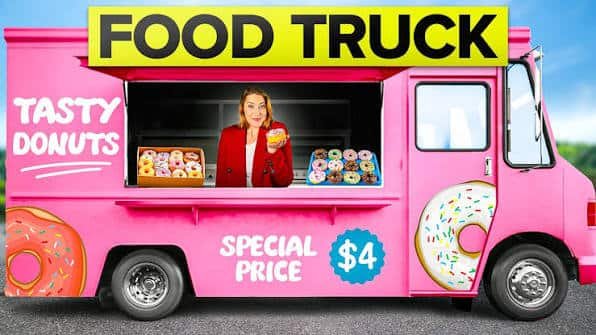
The Advantages
Genuinely Lower Startup Costs Than a Restaurant
This remains the single biggest draw. Food truck startup costs typically run somewhere between $75,000 and $250,000, compared with $300,000 to well over a million dollars for a traditional restaurant location. Skipping the lease, buildout, and expensive interior decor of a fixed location dramatically lowers the capital barrier to entering food service.
Mobility as a Genuine Competitive Weapon
Unlike a restaurant tied permanently to one address, a food truck can chase demand wherever it exists — parking near office buildings for the lunch rush one day, a brewery in the evening, a farmers market on the weekend, and a festival the following month. This flexibility lets owners test different locations, menus, and customer segments without the sunk cost of relocating a permanent establishment.
Lower Risk, More Room to Pivot
Because the capital investment is considerably smaller, a food truck owner isn’t locked into a single location, lease, or business decision the way a restaurant owner typically is. If a concept isn’t working, adjusting the menu, changing locations, or even pivoting the entire business direction is considerably less financially devastating than it would be for a traditional restaurant with a signed multi-year lease.
Real Path to Restaurant Ownership
Many successful chefs and entrepreneurs have used food trucks specifically as a lower-risk way to build a following, refine a concept, and generate revenue before eventually opening a permanent restaurant — a well-known ice cream brand on the West Coast famously started exactly this way. The truck becomes both a functioning business and genuine market research for a bigger future venture.
Diverse Marketing and Revenue Opportunities
Food trucks can tap into an unusually wide range of revenue occasions — daily office lunch crowds, private catering gigs, festivals, and community events — giving owners multiple income streams beyond a single fixed customer base. This diversity can help smooth out slower periods that a location-locked restaurant simply can’t offset by moving elsewhere.
Growing, Established Industry Infrastructure
The food truck industry has matured considerably since its early days, now representing a substantial, growing market with well-established permitting processes, commissary kitchen arrangements, and equipment suppliers in most major cities. This maturity means new entrants aren’t figuring things out from scratch — there’s a genuine playbook available for those willing to follow it carefully.
The Disadvantages
Genuinely Thin Profit Margins
Despite lower overhead, food truck profit margins remain notably tight — commonly cited in the range of 6% to 25% depending on the source and specific operation, reflecting real ongoing costs in fuel, maintenance, ingredients, and staffing that continue regardless of how many customers show up on a given day. Lower startup cost doesn’t translate into an easy path to strong profitability without disciplined operations.
Severely Limited Physical Space
Working in a food truck often means operating in a space as small as 10×12 feet, shared with storage, cooking surfaces, and staff simultaneously. This cramped environment limits how much inventory can be stocked at once, constrains menu complexity, and makes scaling operations within the truck itself considerably harder than in even a small restaurant kitchen.
Genuine Weather and Location Vulnerability
Mobile food operations are considerably more exposed to weather disruption than a fixed restaurant — a heavy storm can completely cancel an outdoor event or festival that a truck was counting on for the day’s revenue, in a way that might only modestly reduce a restaurant’s indoor foot traffic. This vulnerability adds real unpredictability to daily and seasonal revenue.
Permitting and Regulatory Complexity
Cities enforce specific zoning laws, permit requirements, and health regulations governing where food trucks can operate and for how long, and navigating this “permitting maze” can be genuinely time-consuming and confusing for new owners. Falling short of compliance — parking somewhere unauthorized, missing required permits — risks fines that can meaningfully damage an already thin-margin operation.
Ongoing Maintenance and Equipment Costs
Beyond the initial truck purchase, ongoing maintenance and repairs for both the vehicle and kitchen equipment represent a real, recurring cost that can arrive unpredictably and disrupt operations if a truck breaks down on a high-revenue day. Unlike a stationary restaurant, equipment failure in a food truck can mean the entire business is temporarily unable to operate at all.
Intense Competition for Prime Locations and Events
Success often depends heavily on securing consistently good locations and events, and popular concepts inevitably attract other trucks with similar offerings competing for the same lucrative spots. A generic concept in an already saturated market struggles considerably more than a distinctive one that owns a specific niche or cuisine — differentiation matters as much for a truck as securing the right parking spot does.
Weighing It All Together
A food truck rewards owners who treat it as a genuine, disciplined food business rather than a low-commitment lifestyle experiment — tight cost control, a focused rather than sprawling menu, consistent locations or events, and careful attention to permitting requirements. The operators who thrive respect both the lower barrier to entry and the real operational demands that come with it, rather than assuming reduced startup cost means reduced effort.
The Bottom Line
Food trucks offer a genuinely lower-cost, more flexible entry point into food service compared to a traditional restaurant, with real opportunities to test concepts, chase demand across multiple locations, and even build toward a future restaurant. That said, thin margins, cramped working space, weather exposure, and genuine regulatory complexity mean success depends on disciplined execution rather than the lower startup cost alone. This is a demanding, hands-on business dressed in a more flexible package — not an easier one.
FAQs
Q1. How do I choose the best locations for my food truck to maximize daily revenue?
Researching high-traffic areas that align with your target customer — office districts for lunch crowds, breweries or event venues for evening business, and markets or festivals for weekend traffic — tends to work better than parking wherever seems convenient. Building relationships with event organizers and tracking which specific spots and times generate the strongest sales lets you refine your schedule around what actually performs rather than guessing.
Q2. What’s the biggest hidden cost new food truck owners tend to underestimate?
Ongoing maintenance and repair costs for both the vehicle and kitchen equipment often catch new owners off guard, since a breakdown doesn’t just cost repair money — it can mean losing an entire day or event’s worth of revenue while the truck is out of commission. Budgeting a genuine maintenance reserve, rather than assuming the truck will run smoothly indefinitely, protects against this common and costly surprise.
Q3. Should I start with a used truck or invest in a new, fully built-out one?
A used truck with working equipment can be found for considerably less than a new build, making it a reasonable way to enter the business with lower risk while you validate your concept and build a following. Once you’ve proven demand and built consistent revenue, reinvesting in a newer or more capable truck becomes a lower-risk decision than committing to a large upfront investment before knowing your concept works.
Q4. How important is having a focused menu versus offering more variety to attract more customers?
A focused, well-executed menu tends to outperform a sprawling one, since limited physical space makes it genuinely difficult to stock ingredients and maintain quality across too many dishes simultaneously. Owners who pick a specific cuisine or dish and execute it exceptionally well tend to build stronger repeat customer bases and social media followings than those trying to be everything to everyone in a 10×12-foot kitchen.