When most people hear the words “marine insurance,” the mental image is of massive cargo ships navigating international trade routes, multinational corporations moving containers of goods across oceans, and complex commercial arrangements between global importers and exporters. It sounds like a product built for the big end of town — not for a small manufacturer in Ludhiana shipping goods to a distributor in Chennai, or a boutique importer bringing handicrafts from Rajasthan to a retailer in Mumbai.
That perception is one of the most commercially costly misconceptions in Indian small business insurance. Marine insurance is not just relevant to small business owners — for those who regularly move goods from one location to another, it is arguably the most critical and most underutilised insurance product available to them.
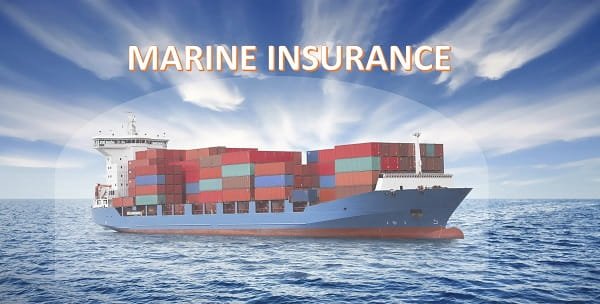
What Marine Insurance Actually Covers
Despite its nautical name, marine insurance in India covers the transit of goods across all modes of transport — sea, air, road, and rail. The “marine” in the name is a legacy of the product’s origins in maritime trade, not a restriction on its application.
A small business owner shipping finished goods by truck from a factory to a warehouse, sending products by courier to customers across the country, importing raw materials by air freight, or exporting finished goods by sea container — all of these transit scenarios fall within the scope of marine insurance coverage.
The core protection marine insurance provides is against loss or damage to goods in transit caused by events that are outside the shipper’s control. Fire damage to a truck carrying your inventory. Flood damage at a transit hub. Theft during road transport. Accidental damage during loading and unloading. Container damage in rough seas. These are the events that marine insurance is designed to address — and any business that moves physical goods faces exposure to all of them.
The Financial Exposure Small Businesses Consistently Underestimate
Small business owners tend to underestimate their transit risk for a straightforward reason — most individual shipments arrive safely. When ninety-nine out of a hundred consignments reach their destination without incident, it’s easy to conclude that the risk isn’t real enough to insure.
This logic works until the hundredth consignment — and when that loss happens, the financial impact is disproportionate. A small manufacturer shipping ₹8 lakh of finished goods in a single truck consignment faces the potential loss of not just the goods but the production cost, the customer relationship, the penalty clause in the supply contract, and the working capital tied up in that shipment. For a business operating on typical small business margins, a single uninsured transit loss of this magnitude can represent months of net profit — or in a worst-case scenario, a genuinely business-threatening event.
The premium for a marine policy covering that same ₹8 lakh consignment is often a few hundred to a couple of thousand rupees — a fraction of a percent of the shipment value. The cost-benefit arithmetic is not ambiguous.
Types of Marine Insurance Policies Relevant to Small Businesses
Two policy structures are most relevant for small business owners, and understanding which one fits your operations can save both money and administrative effort.
A Specific Voyage Policy covers a single, defined shipment from one point to another. It is the appropriate choice for businesses that ship goods infrequently or whose shipment values and destinations vary significantly from consignment to consignment. You obtain coverage for each shipment individually, and the premium reflects the value and nature of that specific consignment.
An Open Policy or Floating Policy is designed for businesses that ship goods regularly and with reasonable predictability. Under this structure, a blanket policy is taken out at the beginning of the year, and individual consignments are declared against it as they are dispatched. The premium is computed periodically based on actual declarations. This approach eliminates the administrative burden of obtaining a new policy for every shipment, reduces per-consignment cost through volume, and ensures coverage is never accidentally missed because an employee forgot to arrange insurance before a particular dispatch.
For most small businesses with consistent shipping activity, an open marine policy is more practical and ultimately more cost-effective than insuring individual consignments.
The Carrier’s Liability Misconception
One of the most dangerous assumptions small business owners make is that the transporter — whether it’s a logistics company, a courier service, or a road freight operator — is fully responsible for any loss or damage to goods in their custody.
In reality, the liability of a carrier under Indian law and standard transport contracts is significantly limited. Most transport contracts cap the carrier’s liability at a fraction of the actual goods value — sometimes at the freight value paid, sometimes at a nominal per-kilogram rate. The carrier is also not liable for losses arising from events classified as acts of God, inherent defects in the goods, or inadequate packaging.
This means that if a truck carrying your goods is involved in an accident and the cargo is destroyed, the transporter’s legal liability may cover only a small portion of your actual loss. The remainder is your problem — unless you hold a marine insurance policy that covers the full value of the goods regardless of who is legally at fault.
Marine insurance and carrier liability are not substitutes for each other. They address different aspects of the same risk, and relying on the carrier’s liability without your own marine cover leaves a significant uninsured gap.
How Claims Work in Marine Insurance
The claims process for marine insurance is more straightforward than many small business owners expect, provided documentation is maintained correctly.
When a loss occurs, you must notify the insurer promptly — most policies specify a notification requirement within a defined number of days of discovering the loss. A survey is typically conducted by a marine surveyor appointed by the insurer to assess the nature, extent, and cause of the damage. Your supporting documentation — invoice, packing list, transport document, delivery receipt showing the loss or damage, and any correspondence with the carrier — forms the basis of the claim.
The most common reason marine claims are delayed or disputed is inadequate documentation at the time of dispatch. Maintaining a complete consignment file — including a pre-dispatch photograph of goods in good condition — is a simple practice that significantly smooths the claims process when a loss does occur.
Frequently Asked Questions (FAQs)
Q1. Does marine insurance cover goods sent through courier services for e-commerce deliveries?
A: Yes, marine insurance can be structured to cover courier and e-commerce deliveries. For businesses with high volumes of small shipments, some insurers offer policies specifically designed for e-commerce transit risk. The key is ensuring that the policy’s definition of covered transit modes includes the specific courier or logistics partners you use and that the per-consignment value limits in the policy are adequate for your typical shipment value.
Q2. Is marine insurance mandatory for small businesses in India?
A: Marine insurance is not legally mandatory for domestic shipments in India for most small businesses. However, for export shipments under certain international trade terms — particularly CIF (Cost, Insurance, Freight) contracts — the exporter is contractually required to arrange marine insurance. For import shipments under certain terms, the importer bears the responsibility. Beyond contractual requirements, the financial exposure is compelling enough that prudent businesses treat it as effectively mandatory regardless of legal obligation.
Q3. What is the difference between All Risk cover and Restricted cover in marine insurance?
A: All Risk cover is the most comprehensive marine insurance option — it covers loss or damage from all external causes unless specifically excluded. Restricted cover, sometimes called Free from Particular Average or named perils cover, covers only specific listed perils such as fire, explosion, stranding, sinking, or collision. All Risk cover is more expensive but provides substantially broader protection. For most small businesses, All Risk cover is the recommended choice — the broader protection is worth the incremental premium given the variety of risks goods face in Indian transit conditions.
Q4. How is the sum insured calculated for a marine insurance policy?
A: The sum insured for marine insurance is typically the commercial invoice value of the goods plus the cost of freight and insurance, with an additional markup — commonly 10% to 15% — to cover incidental expenses such as custom duties, handling charges, and the profit expected from the delivery. This markup ensures the claim settlement reflects the true economic loss rather than just the invoice value. Underinsuring goods to save on premium is a common mistake that results in proportional claim settlements — if you insure for 80% of value, you effectively bear 20% of every loss.
Q5. Can a small business owner get marine insurance even without a formal business registration?
A: Marine insurance is available to any entity that has an insurable interest in the goods being transported — meaning any person or business that would suffer a financial loss if those goods were damaged or lost. Formal business registration strengthens the documentation supporting a claim but is not typically a prerequisite for obtaining a marine policy. Working with an insurance broker who understands the specific requirements of your insurer is the most reliable way to ensure your policy is correctly structured for your business circumstances.
The Bottom Line
Marine insurance is not an enterprise product for large corporations — it is a practical, affordable, and genuinely essential protection for any small business that relies on the movement of physical goods to generate revenue. The goods in transit at any given moment represent working capital, production effort, and customer commitments that deserve the same protection as fixed assets and premises. The premium is modest. The exposure without it is not. For every small business owner who has never arranged marine cover because it seemed like something for bigger players — the first uninsured transit loss will redefine