Top 10 Coffee Shop Chains in India 2026 tell a genuinely mixed story of growth and contraction happening simultaneously — Tata Starbucks crossed 500 stores and hit EBITDA positivity for the first time, while Costa Coffee closed 22 outlets in the same year, its first network decline in over five years, even as revenue climbed 7 percent. India’s café culture has matured well beyond the days when Café Coffee Day was the only real option, now spanning specialty artisanal roasters, international premium brands, and homegrown hybrid concepts all competing for the same increasingly discerning customer. This list covers the top 10 coffee shop chains in India in 2026.
| Rank | Chain | Outlets (approx.) | Positioning |
| 1 | Tata Starbucks | 500+ | Premium international |
| 2 | Café Coffee Day (CCD) | 1,700+ | Mass-market affordable |
| 3 | Costa Coffee | 198 | Urban premium |
| 4 | Barista | Limited outlets | Premium ambiance |
| 5 | Third Wave Coffee | Growing rapidly | Specialty/artisanal |
| 6 | Blue Tokai Coffee Roasters | Growing rapidly | Specialty/artisanal |
| 7 | Tim Hortons | Expanding | International premium |
| 8 | Chaayos | Large hybrid network | Tea-coffee hybrid |
| 9 | Pret A Manger | Recently launched | International premium |
| 10 | Coffeecana | Franchise-focused | Budget/mid-market |
1. Tata Starbucks
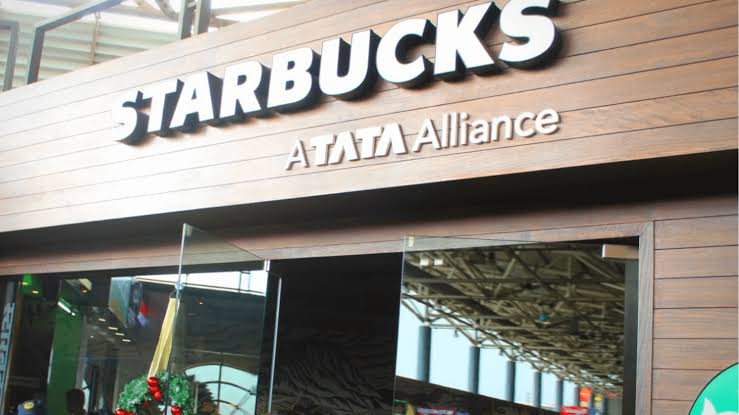
Tata Starbucks, the 50-50 joint venture between Starbucks Corporation and Tata Consumer Products, has grown into India’s most prominent premium café chain since launching in 2012.
- Surpassed 500 cafés, reaching 502 outlets across more than 80 Indian cities by late 2025
- Achieved EBITDA positivity in FY26, a significant operational milestone for the Indian joint venture
- Reported FY24 revenue of ₹1,218 crore, though the venture posted a net loss that year before this year’s positive shift
- Expansion increasingly extends beyond expensive metros into Tier 2 and Tier 3 cities, alongside airports
2. Café Coffee Day (CCD)
Café Coffee Day remains India’s most widely recognised coffee brand, having played the pioneering role in building the country’s café culture since launching in 1996.
- Operates over 1,700 outlets, with ambitions to expand by another 5,000 locations
- Also maintains an international presence in countries including Austria, Dubai, and Malaysia
- Recorded ₹1,024.79 crore in revenue with ₹6,601.80 crore in total assets, reflecting substantial scale despite past financial challenges
- Positioned firmly in the mass-market, affordable segment, historically instrumental in introducing café culture to India’s youth
3. Costa Coffee
Costa Coffee, owned by The Coca-Cola Company and operated in India exclusively by Devyani International, has taken a more selective approach to growth recently.
- Store count shrank to 198 outlets in FY26 from 220 the previous year, marking its first annual network decline in over five years
- Revenue still grew 7 percent year-on-year to ₹212.5 crore, reflecting higher revenue per outlet offsetting the smaller footprint
- Devyani International attributed the shift to a more disciplined, selective expansion strategy rather than pure network growth
- Continues specifically targeting Gen-Z and millennial customers within India’s rapidly evolving café market
4. Barista
Barista holds a distinctive premium ambiance position within India’s coffee shop landscape, differentiating itself through brand identity and store experience.
- Known specifically for premium ambiance and strong brand identity among India’s established café chains
- Maintains a comparatively limited outlet count relative to CCD, positioning itself toward a more curated, upscale customer experience
- Competes in the mid-to-premium segment alongside international entrants like Costa Coffee
- Represents one of India’s earlier coffee shop brands that helped establish the premium café concept locally
5. Third Wave Coffee
Third Wave Coffee has emerged as a leading voice within India’s specialty coffee movement, targeting a genuinely different customer base than the mass-market chains.
- Focuses specifically on the specialty coffee niche, emphasising bean origin, roasting technique, and brewing quality
- Has received significant investor backing, reflecting strong confidence in India’s growing specialty coffee segment
- Competes directly with Blue Tokai for customers specifically seeking artisanal, quality-focused coffee experiences
- Represents the newer generation of Indian coffee brands built around genuine coffee craft rather than pure convenience
6. Blue Tokai Coffee Roasters
Blue Tokai has built its reputation around technology-forward, artisanal coffee roasting, appealing specifically to India’s increasingly educated coffee consumer base.
- Known for artisanal appeal combined with strong technology adoption across its customer experience
- Has attracted meaningful investor interest, reflecting growing market confidence in India’s specialty coffee category
- Competes in a segment defined by higher prices but genuinely differentiated quality compared to mass-market chains
- Represents the direct-to-consumer and café hybrid model increasingly common among India’s newer coffee brands
7. Tim Hortons
Tim Hortons, the Canadian coffee and quick-service brand, has been aggressively expanding its Indian presence in recent years.
- Plans to open 120 stores by 2026, backed by a $37 million investment commitment
- Represents growing international investor confidence in India’s expanding demand for high-quality coffee experiences
- Competes directly with Starbucks and Costa Coffee for India’s premium international coffee shop segment
- Continues building out its footprint across major Indian metro markets
8. Chaayos
Chaayos has built a genuinely distinctive position by blending India’s traditional tea culture with modern café-style coffee offerings, appealing to a broad domestic customer base.
- Operates a large network combining both tea and coffee offerings under one hybrid café concept
- Appeals specifically to customers seeking a more India-rooted alternative to purely coffee-focused international chains
- Has built strong brand recognition particularly across corporate office hubs and urban shopping districts
- Represents a genuinely successful homegrown alternative bridging traditional and modern beverage culture
9. Pret A Manger
Pret A Manger, the British food-and-coffee chain, has recently entered the Indian market, adding another international premium option to the competitive landscape.
- Recently launched outlets in Mumbai and Delhi, marking its entry into the Indian market
- Joins the broader wave of international coffee and food chains betting on India’s growing urban premium consumer base
- Competes for the same premium, convenience-focused customer segment as Starbucks and Costa Coffee
- Represents the continued internationalisation of India’s competitive café and quick-service beverage market
10. Coffeecana
Coffeecana rounds out this list as a franchise-focused coffee chain targeting India’s budget-to-mid-market café segment.
- Offers relatively accessible franchise investment requirements compared to premium international brands
- Positioned toward budget-conscious entrepreneurs seeking to enter India’s growing café franchise market
- Competes in a different tier than Starbucks or Costa Coffee, focusing on affordability and franchise accessibility
- Represents the broader trend of smaller, franchise-driven coffee brands filling gaps in India’s expanding café ecosystem
Frequently Asked Questions
Q1. Which coffee chain has the most outlets in India in 2026?
Café Coffee Day holds the largest network with over 1,700 outlets, though Tata Starbucks has grown rapidly to surpass 500 stores while achieving EBITDA positivity for the first time.
Q2. Why did Costa Coffee reduce its store count in India despite revenue growth?
Franchise partner Devyani International adopted a more disciplined, selective expansion strategy, prioritising higher revenue per outlet over rapid network growth, resulting in the first store count decline in over five years.
Q3. What’s the difference between specialty coffee brands like Blue Tokai and mainstream chains like CCD?
Specialty brands like Blue Tokai and Third Wave Coffee emphasise bean origin, roasting craft, and premium quality at higher prices, while mainstream chains like CCD prioritise affordability and widespread accessibility.
Q4. Is Chaayos considered a coffee chain or a tea chain?
Chaayos operates as a genuine hybrid, offering both traditional Indian tea and modern coffee options, making it a distinctive alternative to purely coffee-focused international chains like Starbucks or Costa Coffee.