Trading terminology can feel dense until you see it applied to an actual scenario. That’s the easiest way to understand a Contract for Difference, commonly shortened to CFD. Once you have the cfd meaning clear, the mechanics behind price speculation, leverage, and settlement start to make a lot more sense.
What Is a CFD?
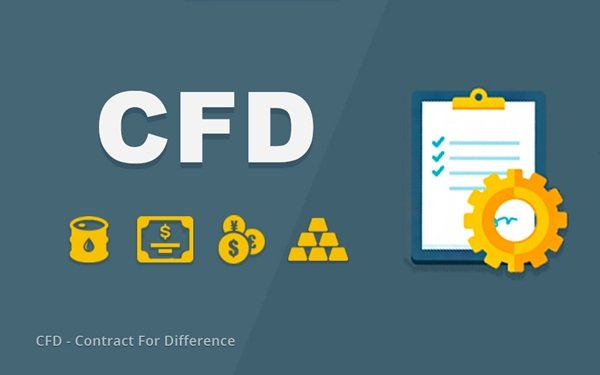
A CFD is an agreement between a trader and a broker to exchange the difference in an asset’s price from when the position is opened to when it’s closed. No physical asset changes hands. You’re not buying gold, oil, or shares outright — you’re trading on the direction their price moves.
If the price moves in your favor, the broker pays you the difference. If it moves against you, you pay the broker. This is what makes CFDs flexible: the same structure works for going long (expecting a price rise) or short (expecting a price fall).
A Real-World Example
Say a stock is trading at $50, and you believe it’s about to rise. Instead of buying 100 shares outright for $5,000, you open a CFD position on 100 shares using a fraction of that amount as margin, thanks to leverage. If the price climbs to $55, you earn the $5 difference per share — $500 in total — without ever owning the stock.
Now flip the scenario. If the price drops to $45 instead, you’d owe the $5 difference per share, resulting in a $500 loss. This example shows both sides of the same coin: leverage magnifies gains, but it magnifies losses just as easily. That’s why risk management, not just market direction, is central to CFD trading.
Why Leverage Changes the Equation
Leverage is often the first thing people notice about CFDs. It lets traders control a larger position with a smaller upfront deposit. But it doesn’t change the actual price movement of the asset — it changes how much of your own capital is exposed to that movement. A 2% move on a leveraged position can mean a much larger percentage swing in your account balance than it would in a standard cash purchase.
Where CFDs Fit Today
CFDs are used across asset classes — indices, commodities, forex, and individual stocks — largely because they let traders access markets without dealing with ownership logistics like storage, dividends processing, or physical settlement. Most people trading CFDs today do so through a trading app, since real-time pricing, quick order execution, and mobile charting have become baseline expectations rather than extras. A trading app also makes it easier to monitor margin levels and manage open positions on the go, which matters given how quickly leveraged positions can move.
Conclusion
CFDs work by letting traders speculate on price movement without owning the underlying asset, using leverage to control larger positions with smaller capital outlay. The trade-off is straightforward: potential gains and potential losses are both amplified. Understanding this through real examples — rather than just definitions — makes it easier to see why position sizing, stop-losses, and a clear read on market conditions matter as much as picking a direction.
FAQs
Q. What does CFD stand for?
CFD stands for Contract for Difference — an agreement to exchange the price difference of an asset between the opening and closing of a trade.
Q. Do I own the asset when trading a CFD?
No. CFDs are derivative products, meaning you’re trading on price movement rather than taking ownership of the underlying asset.
Q. Can I trade CFDs on a mobile trading app?
Yes. Most brokers offer a trading app with live pricing, charting tools, and order management, making it possible to open and monitor CFD positions from a phone or tablet.
Q. Is leverage compulsory when trading CFDs?
Leverage is typically built into how CFDs are structured, but the amount used can usually be adjusted depending on the broker and the trader’s risk appetite.
Q. Are CFDs suitable for beginners?
CFDs carry higher risk due to leverage, so beginners are generally advised to start with a solid understanding of risk management and, where possible, practice on a demo account first.