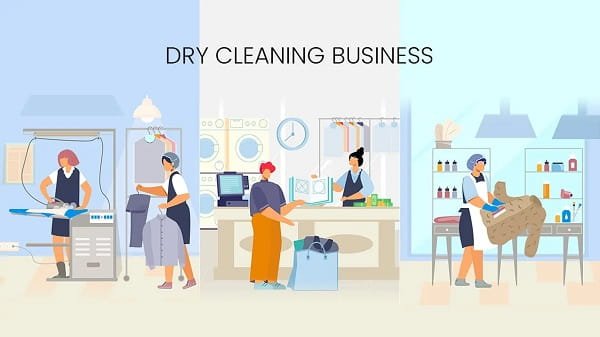
The dry cleaning business is a specialised and technically sophisticated garment care service that occupies a premium position in India’s laundry services market — serving consumers who own delicate, expensive, or professionally important garments requiring care that standard washing cannot safely provide. Rising incomes, growing wardrobe investment in premium fabrics, the expansion of corporate culture requiring immaculate professional dress, and the increasing complexity of modern fabric blends that cannot be home-washed have collectively created a growing and relatively premium market for professional dry cleaning services.
From a standalone dry cleaning outlet to a pickup-and-delivery dry cleaning service or a laundry aggregator franchise, the dry cleaning business offers genuine commercial opportunity for detail-oriented entrepreneurs. Understanding its complete picture is essential for sound business planning.
Advantages of Dry Cleaning Business
1. Premium Service with Strong Pricing Power
Dry cleaning occupies the premium end of garment care — customers bringing expensive suits, silk sarees, bridal lehengas, cashmere shawls, and designer garments for dry cleaning are not price-sensitive in the same way as commodity laundry customers. They are paying for expertise, fabric safety, and the assurance that their valuable garments will be returned in excellent condition. This premium service positioning supports pricing of ₹200–600 per garment for standard dry cleaning, and significantly higher for delicate luxury items — generating per-transaction revenue that makes even moderate daily volume commercially viable.
2. Recurring Customer Base with High Retention
Dry cleaning customers who trust a particular outlet with their valuable garments are exceptionally loyal — the risk of garment damage from switching to an unfamiliar service provider creates strong natural retention. Corporate professionals who dry clean suits, blazers, and formal wear regularly create weekly recurring revenue streams. Bridal and occasion wear customers return seasonally. Building a trusted reputation for consistent quality and reliable garment return in the dry cleaning business creates a loyal client base whose lifetime value is substantially higher than most retail service customers.
3. Technology Differentiation Opportunity
Modern dry cleaning offers genuine technology differentiation — professional spotting techniques, eco-friendly solvent systems, ozone treatment, steam finishing, and specialised fabric restoration capabilities create service quality advantages that home washing and informal laundry services simply cannot replicate. Entrepreneurs who invest in contemporary equipment and trained technical staff can position their dry cleaning service as clearly superior to informal alternatives — justifying premium pricing through demonstrable quality outcomes that customers’ valuable garments validate.
4. Pickup and Delivery Model Expansion
The dry cleaning business has been transformed by the pickup-and-delivery service model — app-based and WhatsApp-based garment collection and delivery services dramatically expand a dry cleaner’s geographic reach beyond walk-in catchment and eliminate the customer’s primary service adoption barrier of travel inconvenience. Aggregator platforms like Laundrywala, Washmart, and similar services have demonstrated that Indian consumers are willing to pay premium prices for doorstep dry cleaning convenience. A dry cleaning business that develops efficient pickup-delivery logistics can serve a much larger customer base than a purely walk-in operation.
5. Complementary Service Diversification
Dry cleaning operations can expand naturally into complementary garment and textile care services — leather cleaning and conditioning, carpet and upholstery cleaning, curtain dry cleaning, shoe restoration, and wedding dress preservation all leverage existing chemical expertise, equipment capability, and client trust. Each service addition increases revenue per customer visit and strengthens the client relationship that makes the dry cleaning business’s customer retention advantage even more commercially powerful. Industrial and commercial laundry contracts — for hotels, hospitals, and corporate linen — provide bulk volume that utilises machinery capacity during retail slow periods.
Disadvantages of Dry Cleaning Business
1. High Equipment Investment and Technical Complexity
Professional dry cleaning requires specialised machinery — dry cleaning machines using perchloroethylene or hydrocarbon solvents, steam finishing equipment, commercial pressers, and spotting boards collectively require ₹10–30 lakhs for a properly equipped establishment. This capital requirement significantly exceeds most laundry service businesses. The equipment also requires technical expertise to operate correctly — improper solvent concentrations, incorrect temperature settings, or inadequate finishing technique can damage expensive garments in ways that generate customer complaints and liability claims that can be financially devastating.
2. Chemical Handling and Environmental Compliance
Traditional dry cleaning solvents — particularly perchloroethylene — are classified as environmental pollutants requiring careful handling, storage, and disposal under pollution control regulations. Solvent vapour management, effluent treatment, and waste solvent disposal all require compliance investment and ongoing regulatory management. The increasing regulatory pressure on traditional dry cleaning chemicals is pushing the industry toward more expensive eco-friendly alternatives that require equipment upgrades. Entrepreneurs entering dry cleaning must understand and budget for chemical compliance as an ongoing operational reality.
3. Garment Damage Liability Risk
The most significant ongoing risk in dry cleaning is garment damage — chemical reactions with certain fabric treatments, colour bleeding, shrinkage, or finishing errors can damage or destroy customer garments that may be irreplaceable. A damaged wedding saree or a customer’s grandfather’s sherwani creates not just financial liability but deep emotional distress that generates extremely negative word-of-mouth in trust-dependent service businesses. Managing damage risk requires qualified technical staff, pre-treatment garment assessment, careful chemical selection, and clear customer communication about fabric-specific risks — practices that require both investment and discipline.
4. Skilled Labour Scarcity
Qualified dry cleaning technicians with genuine expertise in fabric assessment, solvent management, and finishing technique are scarce in most Indian markets — particularly outside major metropolitan cities. The technical nature of dry cleaning work means that unskilled labour cannot be substituted for experienced technicians without compromising service quality. Finding, training, and retaining capable dry cleaning staff is a persistent operational challenge that constrains both quality consistency and geographic expansion capability.
5. Slow Customer Acquisition and Trust Building
New dry cleaning businesses must overcome the fundamental customer trust barrier — people do not entrust expensive garments to an unfamiliar service provider without strong evidence of reliability. Building the reputation, reviews, and community word-of-mouth needed to generate reliable daily walk-in volume takes months of consistent quality delivery. During the establishment phase, low volume creates cash flow pressure against fixed equipment financing costs and rental obligations — a financial squeeze that requires adequate startup capital reserves to survive through the trust-building period.
Frequently Asked Questions (FAQs)
Q: Is dry cleaning business profitable in India?
A: Yes — a well-established dry cleaning outlet with consistent volume can achieve net margins of 20–30%. Pickup-delivery models in premium urban markets tend to achieve the strongest economics.
Q: How much investment is needed to start a dry cleaning business in India?
A: A basic dry cleaning setup requires ₹10–25 lakhs for machinery, premises fit-out, and initial working capital. Premium establishments require ₹25–50 lakhs.
Q: What licences are required for a dry cleaning business in India?
A: Shop and establishment registration, GST registration, pollution control board consent for chemical handling, and fire safety compliance are the primary requirements.
Q: Is eco-friendly dry cleaning more profitable than traditional methods?
A: Eco-friendly dry cleaning using hydrocarbon or CO2 solvents commands premium pricing in health-conscious urban markets and avoids the increasing regulatory burden on traditional solvents — making it increasingly attractive despite higher equipment costs.
Q: Can dry cleaning be started as a home business in India?
A: Chemical handling requirements and equipment scale make true dry cleaning impractical as a home business. A small commercial premises with proper ventilation and chemical storage is the minimum viable setup.