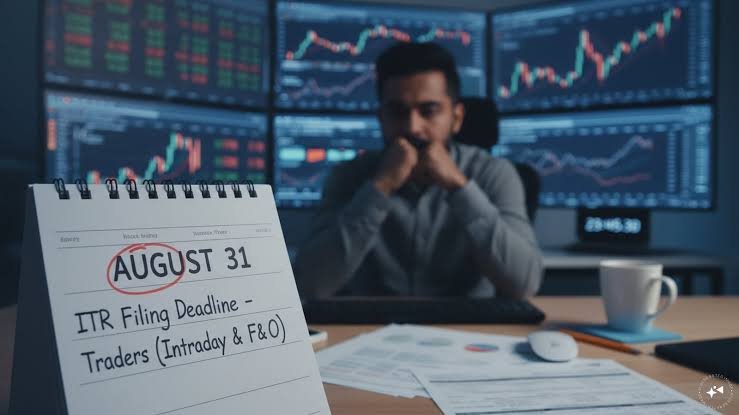
A trading bot and a discretionary trader can examine the same stock chart yet reach decisions through completely different processes. One follows programmed instructions, while the other relies on human interpretation, experience, and judgment.
This distinction matters because automated trading is frequently marketed as a smarter replacement for human decision-making. In reality, automation changes how decisions are implemented, not whether those decisions are inherently correct.
Trading bots execute predefined rules through software, whereas fully discretionary trading depends on a person’s judgment when evaluating market conditions and making decisions.
Both approaches have advantages, limitations, and operational risks. For Indian market participants, understanding these differences is useful when studying algorithmic trading, financial technology, and the role of human decision-making in securities markets.
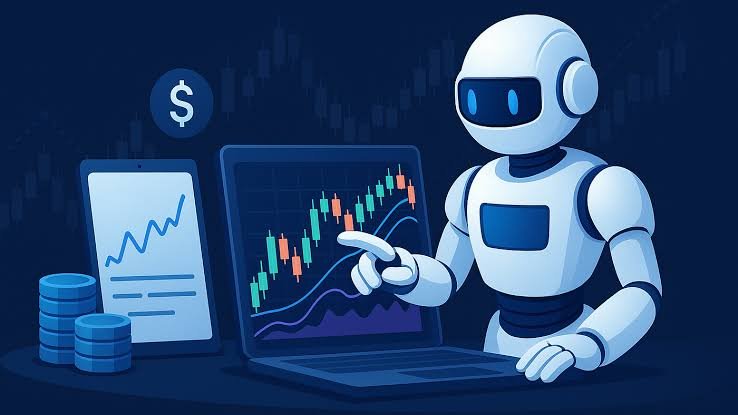
Two Different Ways of Making Market Decisions
The easiest way to understand the difference is to examine who controls the decision.
In discretionary trading, a person interprets available information and decides whether a particular market action is appropriate.
That interpretation may involve company announcements, price charts, economic developments, or personal market experience.
A trading bot operates differently.
Its decisions are governed by programmed conditions, which may involve prices, indicators, market data, or other measurable inputs.
The software processes information according to its instructions.
However, those instructions originate from human-designed rules, models, or systems.
Automation therefore does not eliminate human influence. It shifts much of that influence towards system design and supervision.
Trading Bots Depend on Rules Rather Than Intuition
A trading bot cannot independently understand financial markets in the same way a human analyst attempts to interpret them.
Traditional rule-based bots evaluate whether specified conditions have been satisfied.
For example, a hypothetical educational programme might monitor whether a moving average crosses another moving average.
When the programmed condition occurs, the software records a signal.
A more complex system may incorporate additional information, such as volatility measurements or historical statistical relationships.
Some systems use machine learning, but artificial intelligence is not a requirement for automated trading.
A basic trading bot can operate entirely through fixed mathematical rules.
This is why the terms algorithmic trading and AI trading should not automatically be treated as interchangeable.
Discretionary Trading Allows Contextual Interpretation
Human decision-making is more flexible.
A discretionary trader may interpret the same price movement differently depending on the surrounding circumstances.
For instance, a sudden increase in a company’s share price might follow strong financial results.
A human analyst may examine the earnings announcement, compare it with expectations, and consider whether the price reaction appears reasonable.
A conventional trading bot cannot perform this broader interpretation unless its system has been designed to process the relevant information.
However, human flexibility also creates inconsistency.
Two people examining identical information may reach different conclusions.
Even the same individual may interpret similar market conditions differently on separate occasions.
Where Automation Has an Advantage
Trading bots are particularly useful for repetitive tasks requiring consistent calculations.
Software can process market information rapidly and apply predefined conditions without becoming tired or distracted.
Potential operational advantages include:
- Consistency: Identical inputs generally produce identical outputs under the same programmed rules.
- Speed: Software can evaluate predefined conditions quickly.
- Continuous monitoring: Systems can monitor data during their configured operating periods.
- Recordkeeping: Automated processes can generate detailed activity logs.
- Scalability: A system may analyse multiple securities simultaneously.
- Repeatability: Clearly defined rules can be evaluated using historical datasets.
These capabilities make automation valuable for market research and operational efficiency.
They do not establish that an automated strategy will generate favourable financial results.
The Weaknesses Hidden Behind Automated Execution
Trading bots depend on software, infrastructure, and data quality.
An incorrect price feed may produce misleading calculations.
A programming error can cause a system to behave differently from its intended design.
Connectivity problems, exchange interruptions, and execution delays may also affect operations.
Another important limitation is that market conditions change.
A rule that appeared effective during one historical period may perform poorly when volatility, liquidity, or market behaviour changes.
Automated systems therefore require monitoring, testing, and appropriate operational controls.
A bot should not be assumed safe simply because it operates without emotional involvement.
Human Judgment Has Its Own Limitations
Discretionary decision-making introduces psychological influences that software-based rules do not experience in the same way.
Fear, excessive confidence, impatience, and selective interpretation can affect human judgments.
For example, someone may become unusually optimistic after observing several favourable market movements.
Another person may focus heavily on negative information following a recent financial loss.
These behavioural tendencies can interfere with consistent analysis.
However, humans can also recognise unusual circumstances and reconsider assumptions without requiring every possible scenario to have been programmed in advance.
The important distinction is not that one approach is intelligent and the other is flawed.
Each processes uncertainty differently.
Trading Bots vs Discretionary Trading: Key Differences
| Feature | Trading Bots | Discretionary Trading |
| Decision-making | Programmed conditions | Human judgment |
| Execution speed | Potentially very fast | Depends on the individual |
| Emotional influence | No human emotions during rule execution | Can affect decisions |
| Flexibility | Limited by system design | Can adapt through interpretation |
| Technical requirements | Software and infrastructure | Market knowledge and judgment |
| Main operational concerns | Coding errors, data failures, connectivity | Inconsistency, bias, fatigue |
| Monitoring | Automated checks plus human oversight | Primarily human supervision |
Neither approach is universally superior.
Their effectiveness depends on the quality of the underlying reasoning, implementation, and market conditions.
How Indian Market Regulations Affect Trading Bots
In India, automated trading arrangements operate within the regulatory framework established by SEBI and the relevant stock exchanges.
Applicable requirements may involve broker systems, order controls, identification of algorithmic orders, and other safeguards.
The specific obligations depend on the arrangement and current regulatory framework.
Retail users should distinguish between software that merely analyses market information and software that automatically submits orders.
The second category introduces additional execution, security, and compliance considerations.
Third-party applications requesting trading account access also create potential data-security risks.
Why Hybrid Approaches Exist
Not every market analysis process is completely automated or fully discretionary.
Some systems combine human oversight with automated calculations.
For example, software may organise historical data and highlight unusual movements, while a human analyst reviews the findings.
Alternatively, a person may design a systematic research model and periodically evaluate whether its assumptions remain reasonable.
These arrangements demonstrate that automation and human judgment are not necessarily competing alternatives.
They can perform different functions within the same analytical process.
Frequently Asked Questions
Q1. What is the main difference between trading bots and discretionary trading?
A: Trading bots follow programmed rules, while discretionary trading relies on human interpretation and decision-making. Both approaches depend on assumptions about financial markets.
Q2. Are trading bots always faster than human traders?
A: Software can process predefined conditions and submit permitted instructions rapidly, but actual execution depends on connectivity, infrastructure, market liquidity, and exchange conditions.
Q3. Can trading bots operate without human supervision?
A: Some systems can operate automatically, but responsible deployment still requires monitoring, maintenance, and operational safeguards. Automation does not eliminate technical or financial risks.
Q4. Do trading bots guarantee better results than discretionary trading?
A: No. Automated strategies can fail because of incorrect assumptions, programming problems, changing market conditions, or execution difficulties.
Q5. Is discretionary trading becoming obsolete because of automation?
A: No. Human interpretation remains relevant in financial research, system design, risk oversight, and situations requiring contextual judgment. Automation changes certain processes rather than eliminating every human role.